EN
EN
What are the latest advancements in hologram technology for foil stamping?
2026/09/11
Hologram foil uses electron beam lithography, kinematic holography, dot matrix diffraction, and nanofabrication for secure high-definition packaging.
2026/09/11
2026/09/11
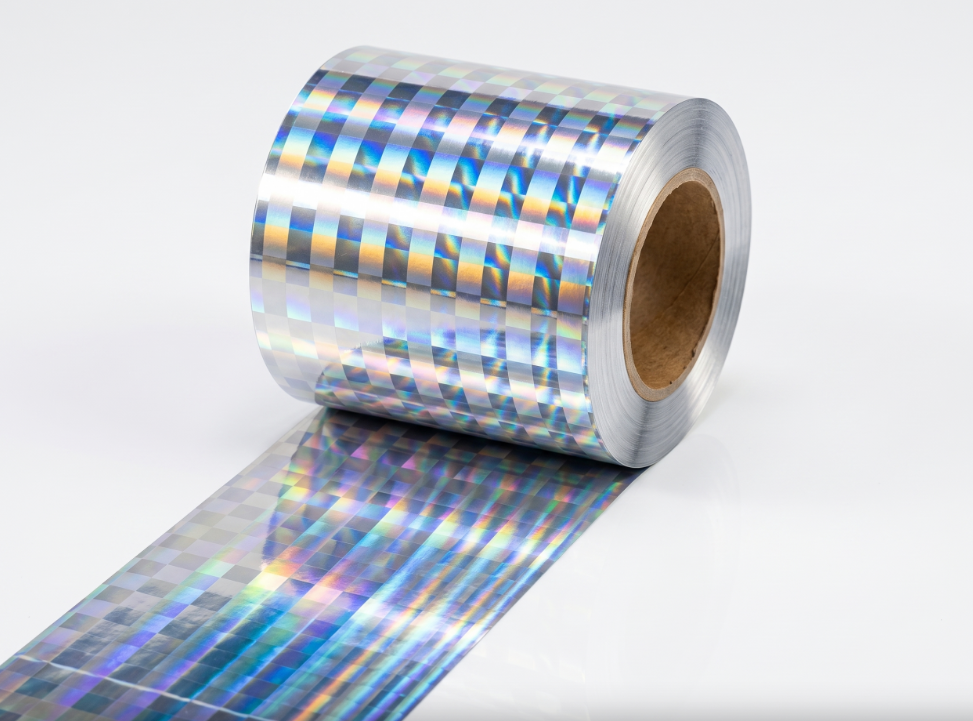
The conversation around anti-counterfeiting foils often starts and ends with what the naked eye can see. A holographic shimmer, a color shift when tilted, a familiar logo. Those are the first line of defense, but they are no longer the last. The real evolution in substrate security isn't just about making a foil brighter or more dynamic. It’s about embedding a second, covert language into the foil’s very structure. This is where laser technology operates, not as a simple etching tool, but as a precision manufacturing platform that redefines what a security feature can be.
To understand the role of a laser in this field, it helps to move past the idea of printing. What’s happening is a highly controlled ablation or modification process. A focused beam of light, often in the ultraviolet or femtosecond range, interacts with the foil’s vacuum-metallized aluminum layer, a film so thin it’s measured in angstroms. The laser doesn't just cut through. It can selectively de-metalize specific areas with sub-micron accuracy, creating micro-text, nano-patterns, or even detuned gratings that bend light in mathematically predictable ways. The key benefit here is non-contact tooling. Unlike a mechanical embossing shim, a laser delivers zero physical stress to the substrate, preserving the fragile layered structure and enabling design geometries that are physically impossible to achieve with a rotary die.
One of the most powerful applications is the marriage of diffractive optics with selective demetallization. A laser system can be programmed to write a sequence of micro-dots, creating a digital code buried within a visually holographic field. Under a pocket microscope or a dedicated reader, this reveals a secondary pattern, maybe a serialized QR code or a specific pulse-position modulation mark. A common pitfall seen in production environments involves the interplay between the laser and the foil’s internal layers. For instance, when validating a new covert code design, a seemingly perfect overt hologram can sometimes mask a covert failure underneath. A subtle variation in the thickness of the release coating, a layer invisible to the eye but critical to the process, can act as an unintended micro-lens. This defocuses the laser beam just enough to scramble a high-density code. Pinpointing this requires not just adjusting laser power, but carefully mapping the laser’s pulse width to the specific optical properties of that nanoscale coating, a level of tuning that generic equipment simply cannot achieve.
Choosing the right laser source dictates the ceiling of what can be achieved. The thermal effect, or lack thereof, defines the edge quality and the feature size. Here is a comparative look at the two dominant methods in foil processing.
|
Feature |
CO2 Laser (Thermal Process) |
UV/Femtosecond Laser (Cold Process) |
|
Material Interaction |
Melts and vaporizes metal via heat. |
Breaks molecular bonds directly, minimizing heat. |
|
Typical Feature Size |
Suited for macro-level features. A visible heat-affected zone is common. |
Capable of extremely fine features. Yields razor-sharp edges. |
|
Substrate Risk |
High. Can warp or damage the base film. |
Negligible. Safe for ultra-thin, heat-sensitive layers. |
|
Practical Use Case |
Large-area demetallization, simple text. |
Covert micro-text, nano-gratings, high-density codes. |
|
Operational Speed |
Fast for macro-scale work. |
Inherently slower, requires precision galvo control. |
The data clearly shows a trade-off between throughput and precision. For a genuine anti-counterfeiting strategy, the “cold” UV or green laser path is the only route that enables true covert authentication, while thermal CO2 lasers serve better for creating obvious, tamper-evident windows.
Generating a laser pattern in a lab is one thing. Repeating it across a large-format roll that stretches for thousands of meters is an entirely different challenge. The unsung hero is the closed-loop vision system. As the foil web flies through the laser station at speed, a high-speed camera array constantly checks the registration, focus, and power output of every pulse. Air bearings and automatic beam expanders adjust in real time to compensate for web flutter or minute changes in ambient humidity that can affect the optics. Without this dynamic control, the laser is blind. A system that lacks robust power monitoring will inevitably produce regions of “whispering” where the beam doesn't fully ablate the metal, leaving a conductive ghost trace that completely destroys the functionality of a capacitive code or an RFID circuit printed on the foil.
Laser technology, however, is not a silver bullet. Its effectiveness is entirely governed by the material stack it processes. A pigment in the lacquer layer that absorbs the laser’s specific wavelength can cause an exothermic reaction, blowing out the coating instead of cleanly removing the metal. Similarly, certain high-barrier primers can fluoresce under UV laser exposure, creating an unwanted optical noise that competes with the intended security feature. This means a fool-proof foil design must be a co-development effort between the coating chemist and the laser physicist. The sophistication of the laser is nullified if the underlying chemistry isn't specifically formulated for laser ablation. Treating them as separate processes inevitably leads to a security feature that looks good on a proof but fails on a high-speed finishing line where frictional heat and tension are added variables.
The migration from analog embossing to digital laser processing for security features is a quiet revolution. It allows for unique, randomized identifiers that follow the principles of physically unclonable functions, moving security from a fixed image to a dynamic, authenticated event. This level of sophistication demands a manufacturing partner whose grasp of surface science is as deep as their optical engineering. GL Foils approaches laser-compatible coatings from this exact intersection. By combining fundamental resin research with precise deposition processes, the team tackles the complexities of demetallization and diffraction grating design on high-speed production lines. This integrated capability, refined through years of solving field-specific failure modes, ensures that a laser security feature isn't just a beautiful pattern under a microscope, but a robust, readable, and reliable industrial tool.
2026/09/11
Hologram foil uses electron beam lithography, kinematic holography, dot matrix diffraction, and nanofabrication for secure high-definition packaging.
2026/09/11
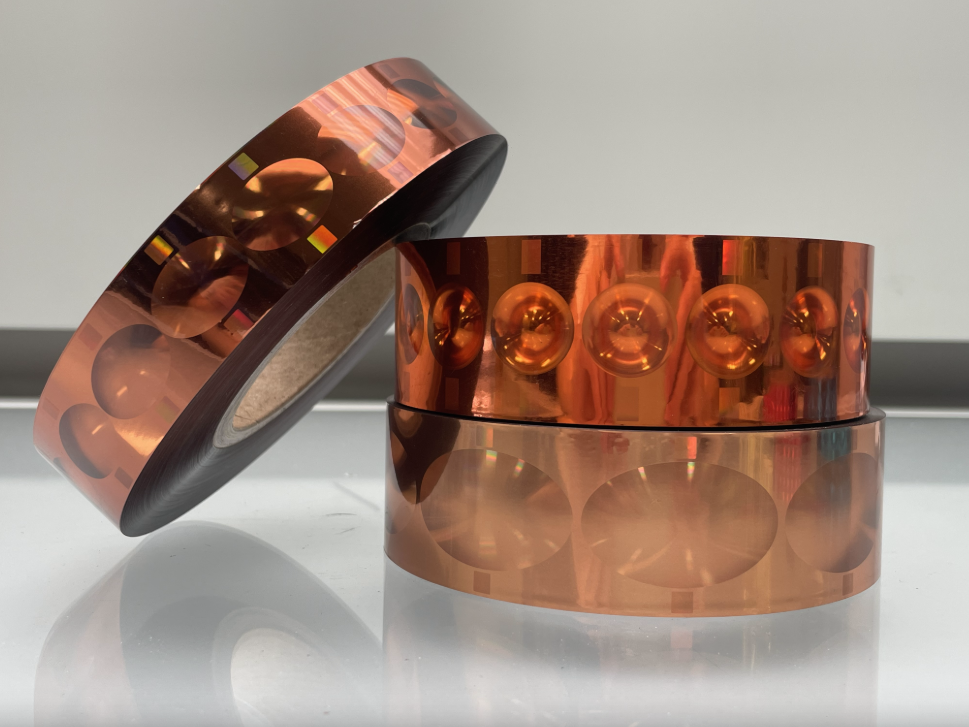
See how light shifts color and motion, adding secure visual effects that resist copying on printed cartons and retail labels for brands worldwide today.
2026/09/11
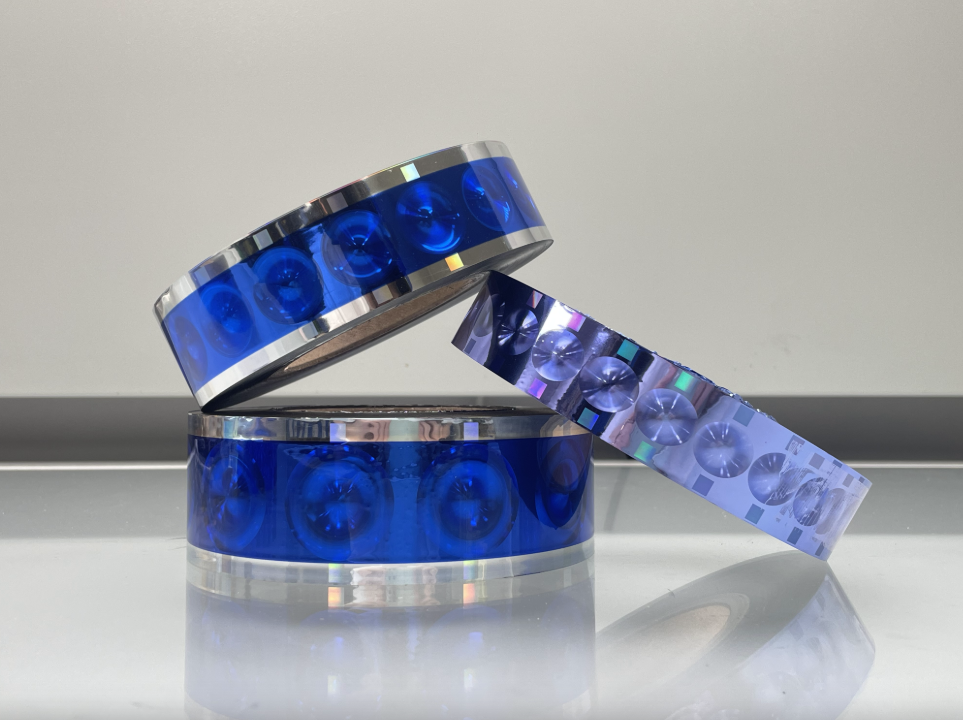
Security holograms and holographic labels add overt protection. Learn optics, foil, design, pitfalls, limits, and fake risks in real world use.
2026/09/11
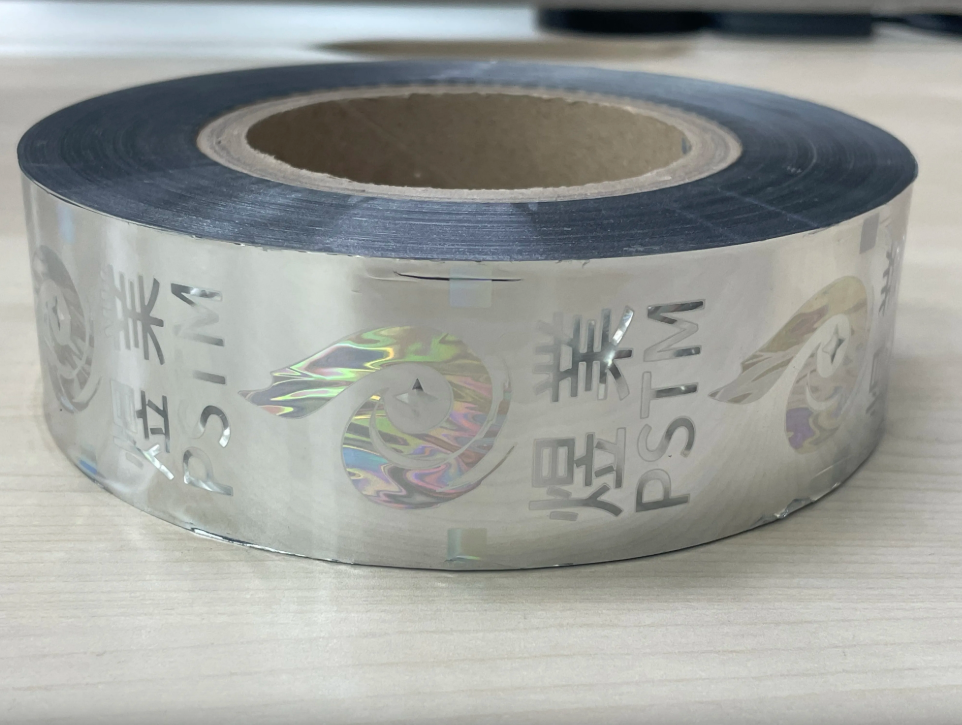
Learn how metal decoration works without heated dies, plus substrate limits and inline setup costs, quality control and output plans for packaging lines.
2026/09/11
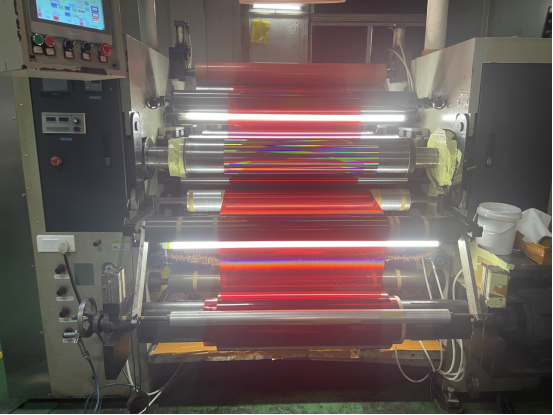
Hot stamping foil uses heated dies; metallic ink prints via a printing process. Compare brilliance, adhesion, rub resistance, cost, substrate for decoration