EN

Hot Stamping Foil on UV-Varnished Cartons: What Buyers Should Check
2026/10/28
Gold foil can be stamped on selected UV-varnished cartons, but the surface and foil must match. Learn what to check before approving a finished box.
2026/10/21
2026/10/21
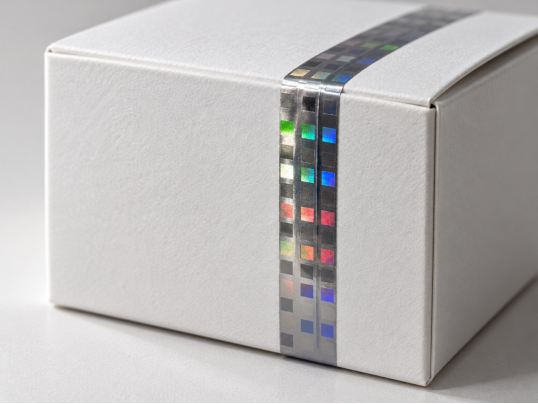
Holographic printing gives brand owners an optical feature whose changing appearance cannot be reproduced by an ordinary flat scan or print. In anti-counterfeiting packaging, its role is to place a recognizable optical structure on the pack so that users can check it against an approved reference. Covert features and serialized codes can add further checks when they are specifically designed into the system; they are not automatic properties of every holographic foil. The sections below explain how diffraction works, how security layers can be combined, and where the process limits sit.
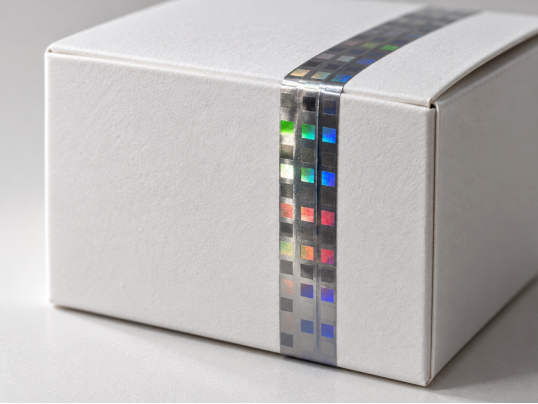
Modern anti-counterfeiting strategies rely heavily on light diffraction structures engineered directly into specialized film layers. Holographic printing creates overt visual security elements using fine surface-relief patterns embossed into a coating supported by a carrier film. When white light strikes these micro-gratings, it diffracts into vivid spectral colors that shift predictably as the viewing angle changes. An ordinary scanner or printer can reproduce a static image of the design, but not the same angle-dependent optical response. This makes simple copying less convincing; it does not make every holographic pattern impossible to imitate.
Reproducing a diffractive feature means rebuilding an entire production chain rather than copying an image. The originator has to generate the interference pattern, convert it into an embossing tool, replicate that relief in the optical coating at consistent depth, and coat the film with a release system and adhesive that survive the press. Each stage introduces tolerances that a scanner never sees. The practical barrier is therefore economic and organizational as much as optical: the equipment, the reference artwork and the coating knowledge all have to line up before a usable copy exists.
Precision embossing control matters on the converting side as well. Consistent relief depth across thousands of linear meters keeps the color shift uniform from the first pack to the last, so an inspector comparing two cartons under the same light sees the same behavior.
Effective security packaging combines overt visual features with covert verification layers. Depending on the selected construction, security stamping foils can combine visible holographic patterns with custom registered imagery, concealed optical features or microtext. Microtext is a fine-detail verification feature, not encryption by itself. During hot stamping, heat and pressure activate the foil's release and bonding systems so that the intended decorative layers transfer to a compatible substrate while the carrier film is removed. Metallized grades contain a reflective metal layer; transparent holographic constructions differ. Maintaining precise chemistry between the release layer and the adhesive layer ensures crisp foil transfer without flaking along fine lines or micro-text borders.
Release behavior, die geometry, dwell time and inspection conditions have to be defined together, because a visually similar holographic foil will not reproduce the same covert information. Converters that manage temperature, speed and nip pressure as one system reduce transfer defects that can degrade the optical appearance on high-speed runs. Fine-tuning dwell time prevents residual thermal stress from warping heat-sensitive polymeric carriers during application.
Verify platen temperature uniformity across all impression zones before initiating production runs.
Select customized release layer formulations matched precisely to smooth or porous paperboard stocks.
Test surface tension metrics on synthetic films to ensure long-term adhesive anchorage.
Visible features support a first check: tilt the pack and compare the expected color shift, motion or image change with an approved reference. Ordinary flat printing does not reproduce the same changing optical appearance.
Covert features need a defined viewing condition or suitable equipment and trained users. Their effectiveness depends on the specific design and verification method, not on the word holographic alone.
Registration controls where a motif sits. Serialization links an individual item to a unique code and checking system. Neither the position of a motif nor microtext alone proves that an item is genuine.
Visible graphics support quick recognition. Covert optical information supports a closer secondary check. Registered, serialized or digital controls can be added when risk demands stronger control. Each layer needs a defined purpose and a verification method agreed before the artwork is released.
Overt security elements let shoppers check a pack at the point of sale without tools. Dynamic visual effects such as kinetic movement, morphing images and three-dimensional depth catch light under standard retail conditions. Naked-eye 3D cat-eye lens structures and aluminum-wash transparent windows add behaviors that a flat scan carries no data for. These optical shifts can support brand recognition when the expected appearance is clearly communicated. A missing or altered feature is a reason for a further authenticity check, rather than proof on its own.
Combining overt holography with serialized digital controls establishes a dual-layer security architecture. Each pack can carry a unique code linked to the brand traceability record, while optical features provide a separate visual reference. Tamper evidence requires a construction designed to reveal opening or removal. A registered hologram positions a motif accurately; serialization gives individual items unique identities. Codes may be incorporated in a purpose-designed foil or applied in a separate printing step and linked to a verification database. Ordinary registered stamping and microtext do not automatically provide one-item-one-code functionality. Integrating visual verification with mobile registration databases encourages end users to actively validate high-value consumer goods.
Implementing optical security foils requires careful evaluation of packaging substrates, press equipment and environmental exposure. Registered holographic stamping can be specified for coated paper, card and suitable label stocks. Cold-transfer constructions are also available for compatible paper and film applications; foil grade, adhesive and press configuration must be matched to the substrate. Smooth coated paperboard can support fine-line holographic stamping, while polymer films require a foil and bonding system designed for that surface, whereas rough, uncoated substrates present adhesion challenges that need suitable surface preparation before the foil goes down. Typical deployments cover premium tobacco cartons, premium spirits, luxury goods and cosmetics packaging, pharmaceutical anti-counterfeit labels, where a visible check has to hold up under real retail light.
Registration accuracy depends on more than the foil. Artwork repeat, sensor mark, foil pitch and press geometry must be aligned as one registered system, and optical requirements are specified separately from the production artwork. Closed-loop optical sensor tracking then holds the holographic pattern to a consistently tight tolerance against its pre-set coordinates, which is what allows a covert detail to sit inside a logo, border or seal instead of floating across the design.
Two useful starting points for press-side investigation are damage to the finish and incomplete transfer. Excessive pressure or heat can damage the transferred surface or substrate and reduce the optical effect; the cause should be checked on the actual construction. Insufficient dwell time or low die temperature leaves the foil incompletely released, producing ragged edges around intricate logo details. Establishing heat, pressure and dwell time through a sample ladder, then verifying after cooling, prevents both. Automated temperature monitoring and tension-controlled foil feeders keep scrap down during long runs, and tape, rub and fold tests assess transfer durability after converting, while humidity resistance requires testing under the intended exposure conditions. Storage conditions protect the release chemistry between deliveries as well: sealed original packaging, a moderate temperature away from direct sunlight, heat and humidity, and jumbo rolls stored using the support method specified for their size.
Building a reliable anti-counterfeiting packaging system requires continuous material research, precise coating chemistry and consistent manufacturing standards. An optical feature is only one part of brand protection. Release properties, adhesive selection, die condition and the agreed inspection method all have to stay stable across repeat orders, so the approved optical reference, artwork position and verification condition should be recorded and reused rather than re-described each time. Production waste, overruns and rejected material also need an agreed handling method, since a discarded roll still carries the pattern.
Material compliance matters alongside security performance. Halogen content, solvent or VOC requirements and packaging compliance are separate checks. Obtain the declarations and test reports applicable to the selected foil grade, finished packaging construction and target market; a low-halogen description alone does not establish compliance.
Stamping foil solutions from GL Foils combine advanced coating technology, extensive variant portfolios, and dedicated technical support, enabling global converters to achieve reliable optical security across demanding packaging applications.
2026/10/28
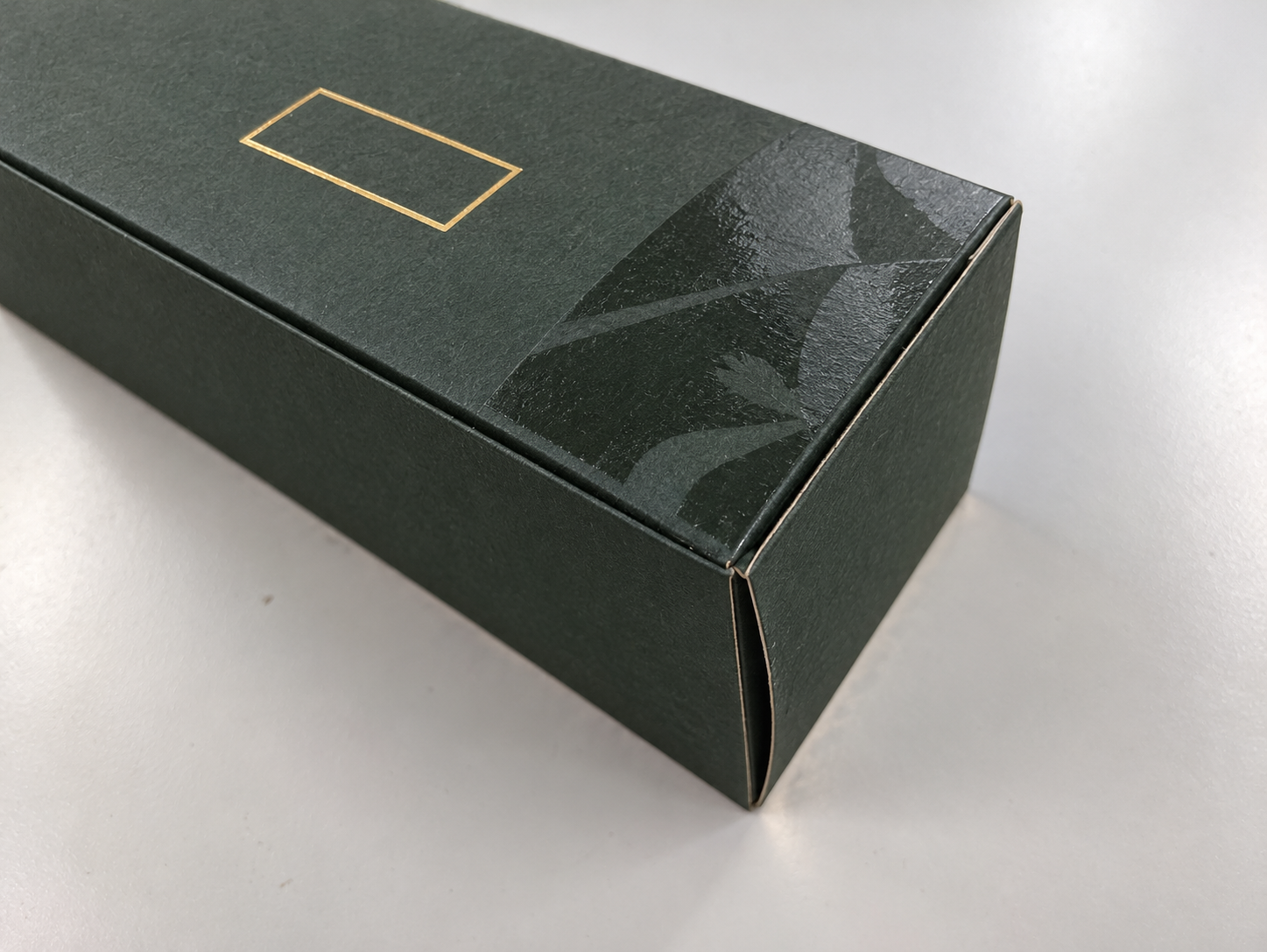
Gold foil can be stamped on selected UV-varnished cartons, but the surface and foil must match. Learn what to check before approving a finished box.

2026/10/26
Gold foil can look perfect on a flat carton and crack after folding. See what to check in the artwork, board, crease and finished sample.
2026/10/27
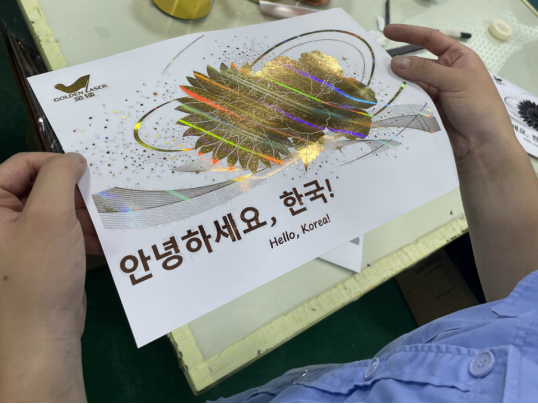
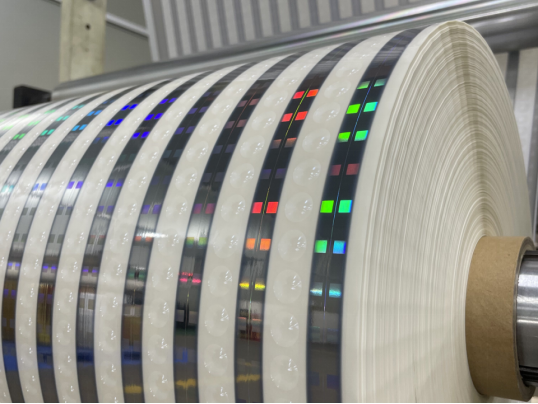
Hot stamping foil delivers metallic and holographic decoration for packaging, with reliable release, adhesion, and press performance.
2026/10/26
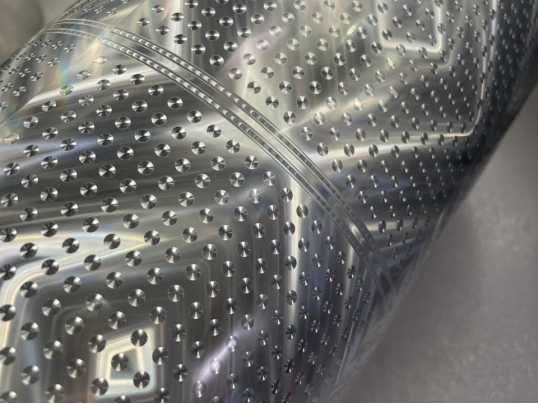
Holographic foil and hologram technology add layered authentication to packaging, supporting brand protection with verifiable optical security.
2026/10/23
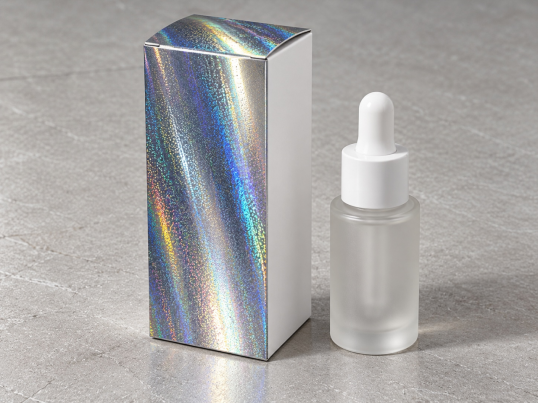
Holographic foil and hot stamping elevate packaging perceived value with consistent optical effects for premium cartons.
2026/10/22
Holographic paper for cosmetic cartons adds light-shifting effects, foil stamping performance, and premium shelf appeal for beauty packaging.