EN
EN

What is the role of laser technology in anti-counterfeiting foil development?
2026/09/11
See how UV and femtosecond lasers write covert codes into anti-counterfeiting foils, plus CO2 demetallization limits and real-time process control.
2026/09/09
2026/09/09
Paper and plastic behave differently under a heated die. Paper is fibrous and often more compressible, while plastic components are non-porous and may distort, soften or change gloss when heat and pressure are excessive. Plastic adhesion also depends strongly on polymer type, surface treatment, coatings, mold-release residue and additives. These variables narrow the process window and make a grade selected only by color unreliable.
Surface energy is one of the main controls on plastic adhesion. If the surface is difficult to wet, contaminated or unevenly treated, the activated adhesive cannot form a continuous bond. Published dyne values for a polymer family are only general references; the useful measurement is the actual part or film at the time of stamping, together with its coating and cleaning history. A target dyne level should be agreed for the specific substrate and adhesive system instead of applying one number to every plastic.
Surface energy gets talked about constantly in printing and converting circles, but on the production floor it often gets reduced to a single number scribbled on a job ticket. The reality is more nuanced. Dyne level measured with test pens or solutions gives a snapshot of wettability, but it does not tell the full story of whether a hot stamping foil adhesive will anchor properly.
Three conditions should be checked for reliable adhesion on plastic. First, the surface must provide sufficient and uniform wettability for the selected foil grade. Second, corona, plasma or primer treatment must cover the whole stamping area consistently. Third, the time between treatment and stamping must be controlled because treatment effectiveness can decline and additives can migrate to the surface. Dyne testing is therefore a process check, not a permanent material certificate.
Heat activates transfer, but it can also distort the plastic part or alter a coating. The practical window is grade-specific: GL Foils plastic grades in the current TDS use recommended temperatures from 210 to 260 degrees Celsius depending on series, substrate and coating. Final temperature, pressure and dwell must be optimized by machine, part geometry, graphic area and deformation tolerance. The table below shows a safer selection framework than assigning one generic temperature to each polymer.
| Plastic surface | Useful GL Foils route | TDS starting range | Critical trial check |
| PP packaging parts | HSQ7; selected HSK6/HSK8 by coating | 210-260 degrees Celsius by grade | Surface condition, deformation, adhesion and resistance |
| PC / ABS / PVC / PETG | HSK6 or HSK8; appliance grades by artwork | 210-260 degrees Celsius by grade | Coating, part geometry and pressure uniformity |
| UV-coated cosmetic parts | HSP2, HSK6 or HSK8 | 210-260 degrees Celsius by grade | Coating cure, cleanliness, alcohol and abrasion target |
| Appliance-panel plastics | HHB9 / HLB9 / HHQ9 / HHP7 by substrate and graphic | Grade-specific trial | Solid area versus fine logo, re-stamping and end-use resistance |
| Glass | Not covered by the current plastic-component range | Separate process required | Do not assume compatibility from a plastic-grade trial |
PP is a demanding substrate because its surface condition and additive package can vary widely, so a PP-focused grade and an actual-part trial are important. Other rigid plastics such as PC, ABS, PVC and PETG also require grade selection by coating and end-use resistance. A setting that transfers cleanly can still be too aggressive if it changes gloss, deforms the component or weakens later resistance performance.
Plastics are not just polymer. They are polymer plus a cocktail of processing aids, slip agents, antistatic compounds, plasticizers, and stabilizers. These additives serve legitimate functions during extrusion, molding, and end use. But many of them are small molecules with a natural tendency to migrate toward the surface over time.
When a slip agent like erucamide blooms to the surface of a polypropylene film, it creates a waxy, low-energy layer that no hot stamping foil adhesive was designed to bond to. The foil might appear to adhere immediately after stamping, only to delaminate days or weeks later as more additive migrates into the interface. This delayed failure is particularly insidious because the job passes initial inspection and leaves the plant looking fine, then falls apart in the customer's hands.
There are two practical defenses against additive migration. One is substrate selection: specifying corona-treated, additive-minimized grades intended for decorating processes. The other is timing: stamping as soon as possible after corona treatment, before the migratory clock has run too long. Neither approach eliminates the risk entirely. Both reduce it to manageable levels.
A foil formulated for paper is not automatically suitable for plastic. Paper and plastic grades are balanced differently for release, activation and adhesion, and a non-porous surface offers less tolerance for contamination or treatment variation. If a paper grade gives weak tape or rub performance on plastic, increasing heat alone may damage the part without correcting the grade-to-surface mismatch.
Plastic-grade foils use adhesive and release systems selected for non-porous substrates and their coatings. GL Foils separates PP-focused, general cosmetic-packaging, UV/PU-coated and appliance-panel grades because the same construction does not cover every surface. The correct comparison is made on the same production part with the same die and settings, followed by the required adhesion, alcohol, abrasion or aging test.
A controlled side-by-side trial can isolate foil compatibility. Stamp a matched plastic grade and the current grade on parts from the same batch, hold die, pressure and dwell constant, and compare transfer, tape adhesion and the relevant resistance requirement after conditioning. If the matched grade improves adhesion without damaging the part, the result supports a grade change; if both fail in the same areas, surface treatment, contamination or pressure distribution remains the stronger suspect.
Discussions about hot stamping foil adhesion tend to fixate on temperature and dwell time. Pressure gets mentioned as an afterthought, if at all. On plastic substrates, pressure plays a more subtle and more critical role than it does on paper.
Paper usually provides more local compliance than a rigid plastic part. On plastic, deviations in die flatness, platen parallelism or part thickness can translate directly into uneven pressure. High spots may mark or deform the component, while low spots may not transfer. Adjust pressure only within the deformation tolerance of the part; then balance temperature and the 0.3-1.0 second dwell range stated in the GL Foils plastic TDS through controlled trials. Flexible films require their own lower-stress test plan rather than a reversed rule applied automatically.
The broader point is that adhesion failures on plastic rarely trace back to a single cause. They usually involve an interaction between surface energy that has drifted downward, a die temperature that was dialed in for paper not plastic, an adhesive formulation never intended for non-porous surfaces, and a pressure setting that assumes the substrate will yield. Isolating which variable is the primary offender takes systematic troubleshooting rather than guesswork.
Foil selection is one variable that can be controlled before production, but it should be documented together with substrate code, surface treatment, coating, part geometry and acceptance test. GL Foils' plastic range includes separate grades for PP, UV/PU-coated cosmetic components and appliance-panel plastics. Sharing the actual part and end-use resistance requirement allows the supplier to narrow the trial window without treating every plastic as one category.
2026/09/11
See how UV and femtosecond lasers write covert codes into anti-counterfeiting foils, plus CO2 demetallization limits and real-time process control.
2026/09/11
Hologram foil uses electron beam lithography, kinematic holography, dot matrix diffraction, and nanofabrication for secure high-definition packaging.

2026/09/11
See how light shifts color and motion, adding secure visual effects that resist copying on printed cartons and retail labels for brands worldwide today.
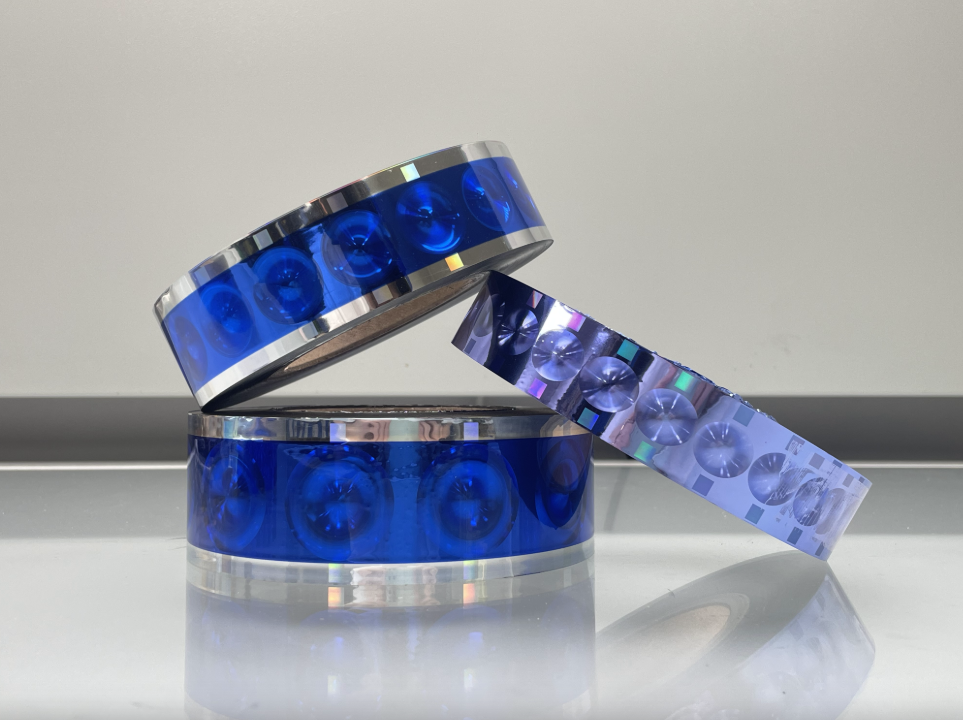
2026/09/11
Security holograms and holographic labels add overt protection. Learn optics, foil, design, pitfalls, limits, and fake risks in real world use.
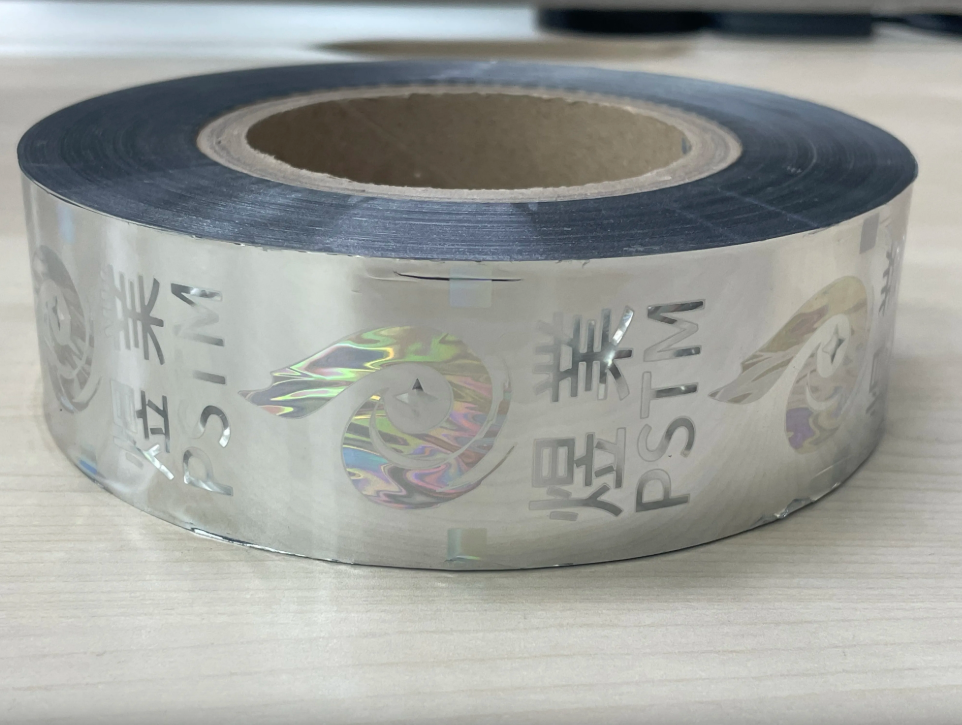
2026/09/11
Learn how metal decoration works without heated dies, plus substrate limits and inline setup costs, quality control and output plans for packaging lines.
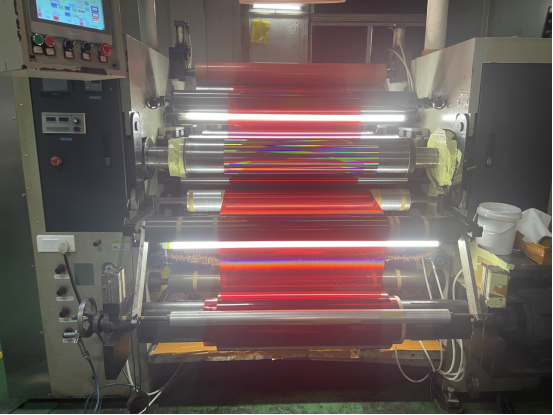
2026/09/11
Hot stamping foil uses heated dies; metallic ink prints via a printing process. Compare brilliance, adhesion, rub resistance, cost, substrate for decoration