EN
EN
What is the role of laser technology in anti-counterfeiting foil development?
2026/09/11
See how UV and femtosecond lasers write covert codes into anti-counterfeiting foils, plus CO2 demetallization limits and real-time process control.
2026/09/11
2026/09/11
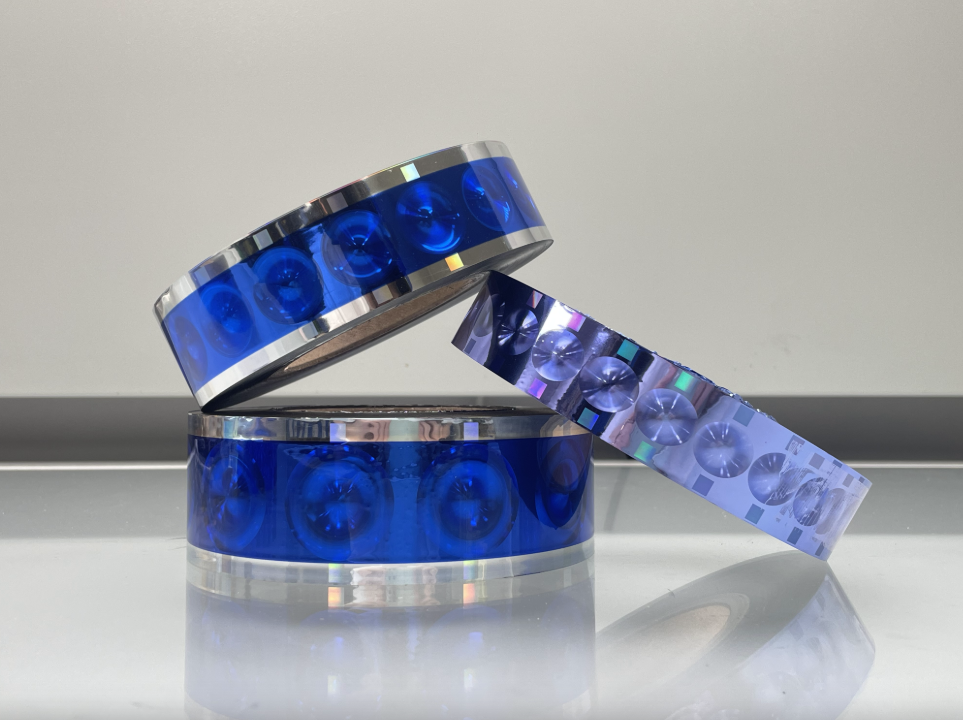
A hologram on a security label does something that printed ink and flat metallic foils cannot. It reconstructs a three-dimensional light field from a two-dimensional surface, producing depth, motion, and color shifts as the viewing angle changes. This is not a printing effect. It is a physical microstructure embossed into a metallic or transparent layer at the submicron scale, typically using a nickel shim that carries the inverse of the holographic pattern.
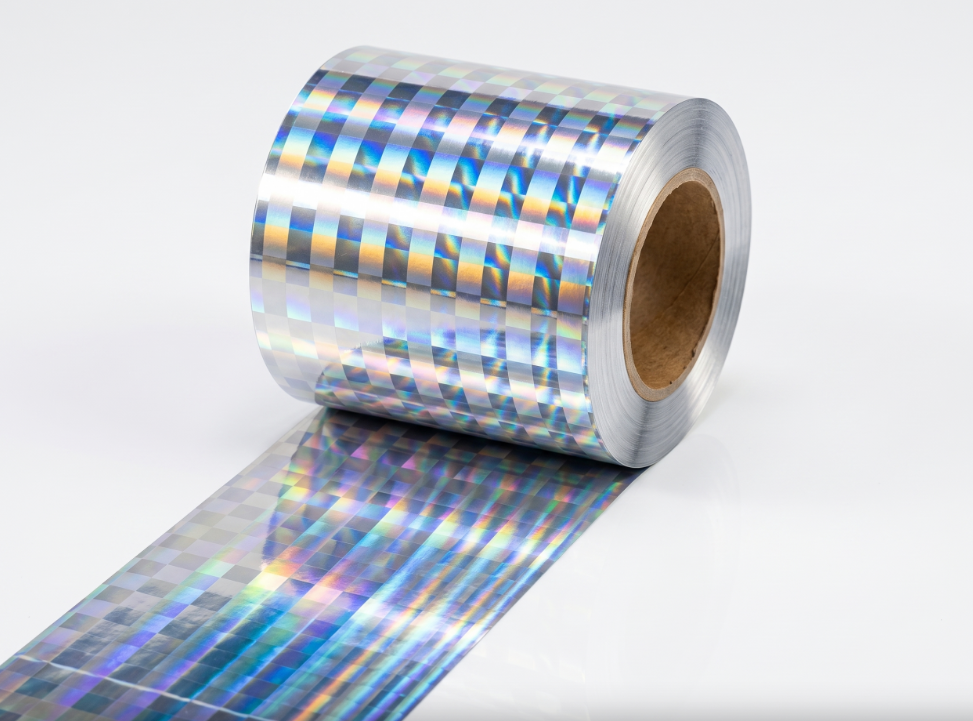
The microscopic grooves and gratings in a holographic foil act as a diffraction grating. White light hitting the surface splits into its spectral components, with different wavelengths reflecting at different angles. The human eye perceives this as a rainbow shift across the image. More sophisticated holograms incorporate multiple grating frequencies and orientations in different regions of the same image, creating kinematical effects where elements appear to move independently as the label tilts. The physics is well understood. The manufacturing precision required to replicate it accurately, however, is what separates genuine security holograms from decorative sparkle patterns.
Anti-counterfeiting strategies rarely rely on a single feature. The most effective approaches layer multiple security elements that span overt, covert, and forensic categories. Hologram technology occupies the overt security layer, the features a consumer or inspector can verify with unaided vision. An overt hologram serves as the first line of defense: visible, memorable, and difficult enough to replicate that counterfeiters often avoid it entirely in favor of products with weaker packaging security.
The table below positions holograms alongside other common anti-counterfeiting technologies to clarify where each fits in a layered strategy:
|
Security Layer |
Technology Examples |
Verification Method |
Relative Counterfeiting Difficulty |
|
Overt (visible) |
Holograms, color-shift inks, guilloche patterns |
Unaided eye, simple tools |
Moderate to high |
|
Covert (hidden) |
UV-fluorescent inks, microtext, taggants |
UV lamp, magnifier |
High |
|
Forensic (lab) |
DNA markers, isotopic tracers, nano-taggants |
Laboratory analysis |
Very high |
|
Digital/Track |
QR codes, RFID, serialized databases |
Smartphone, scanner |
Variable, depends on backend security |
Holograms do not replace covert or forensic features. They complement them. The consumer who tilts a label and sees the expected holographic effect gains confidence in the product. The investigator who finds the hologram intact but suspects a refilled or diverted genuine container then turns to the covert or digital layers for further verification.
Producing a security-grade holographic foil begins long before any label converter touches the material. The process starts with mastering, where the holographic image is created as a surface relief pattern on a photoresist plate using laser interference or e-beam lithography. That master generates a nickel shim through electroforming, a process that deposits nickel onto the master surface to create a durable, inverse replica suitable for embossing.
The shim mounts onto an embossing machine that presses the holographic pattern into a heat-softened lacquer layer coated on a polyester carrier film. After embossing, the structured lacquer surface receives a vacuum-deposited aluminum layer that makes the diffraction pattern visible. A release coating and a heat-activated adhesive complete the foil construction. The finished roll ships to label converters who apply it via hot stamping onto paper, film, or board substrates.
Each step in this chain affects the security value of the final hologram. A shim that wears unevenly during embossing introduces artifacts that degrade the sharpness of the diffraction pattern. Aluminum deposition that varies in thickness shifts the brightness and color balance. Adhesive that applies too thickly or thinly alters how the foil transfers and whether the holographic structure survives the stamping process intact. Security holography is as much about process control as it is about optical design.
Hologram technology only functions as a security feature if the implementation respects its physical requirements. Several recurring problems undermine holographic label effectiveness in practice.
Substrate smoothness ranks near the top of the list. The embossed diffraction grating sits in a lacquer layer only a few microns thick. If the label substrate is rough or textured, the holographic layer conforms to that surface irregularity at transfer, disrupting the grating geometry and dulling the optical effect. A hologram that looks brilliant on a coated paper facestock can appear flat and lifeless on an uncoated kraft liner. The substrate choice is not a secondary consideration. It determines the optical floor.
Adhesive selection introduces another failure mode. The adhesive layer sits directly behind the aluminum coating. If the adhesive contains solvents or plasticizers that migrate into the metallized layer over time, the aluminum can corrode or delaminate, progressively destroying the holographic pattern from behind. This degradation may take months, meaning labels that looked perfect at application fail inspection later in the supply chain.
Die cutting and matrix stripping present a mechanical risk. The holographic structure is brittle at the micron scale. Poorly maintained rotary dies or excessive stripping tension can introduce micro-fractures along label edges that propagate inward over time. What starts as a hairline crack at the die line becomes a visible delamination zone weeks later.
A recurring weakness in holographic label security arises when brands rely on stock holographic patterns that are available to any buyer on the open market. A basic decorative holographic foil provides visual shimmer, but it offers no meaningful differentiation from a counterfeit label produced with the same commercially available material. The hologram checks the box for "has a shiny rainbow feature" without establishing whether the label is genuine.
Analysis of counterfeit incidents across multiple product categories reveals a consistent pattern. Counterfeiters source generic holographic foils with patterns visually similar to those used on authentic products. Pharmacists, distributors, and even brand enforcement teams conducting visual inspection cannot reliably distinguish a stock hologram on a genuine label from the same stock hologram on a fake. The security feature is present on both. It protects nothing.
The solution lies in custom holographic design. Features such as nanotext, micro-imagery at scales invisible to the unaided eye, embedded in specific regions of the holographic image, create verifiable differentiation. These features require a custom shim, which adds upfront tooling cost and extends lead time. But the investment shifts the economic equation against counterfeiters. Generic holographic foils on the open market do not carry custom nanotext features, and reverse-engineering a custom shim from a finished label carries a cost prohibitive enough to redirect counterfeiters toward less-protected targets. Field verification requires only a simple magnifier, making the security check accessible across distribution centers and retail points without laboratory equipment.
The underlying principle is straightforward: hologram technology provides security value proportional to its specificity. A stock pattern offers minimal protection. A custom-designed hologram with features calibrated to a defined verification protocol forces counterfeiters to either invest in costly replication or move on to easier targets.
No security technology is unbreakable, and hologram technology is no exception. Sophisticated counterfeiters with access to embossing equipment and electroforming capabilities can produce passable replicas of simpler holographic designs. The barrier is economic rather than absolute: a custom hologram raises the cost and complexity of counterfeiting to the point where targeting a different, less-protected product becomes more attractive.
Holograms also provide no defense against diversion or refilling. A genuine product in a genuine container with an intact holographic label can still be stolen, diverted to unauthorized channels, or diluted and repackaged. Holographic security must integrate with supply chain tracking, tamper-evident packaging features, and distribution audits to address these threats.
Environmental durability matters in practice. Holographic labels exposed to solvents, plasticizers, or prolonged UV radiation can experience degradation of the aluminum layer or embrittlement of the lacquer. Labels designed for pharmaceutical vials or automotive parts face different chemical and thermal environments than labels for consumer electronics packaging. The foil construction must match the expected service conditions, or the security feature degrades alongside the label.
The production of security-grade holographic foils demands manufacturing precision that not all suppliers deliver. Consistency in embossing pressure, metallization thickness, and adhesive uniformity determines whether the hundred-thousandth label looks identical to the first. Manufacturers like GL Foils operate specialized holographic foil production lines with the process controls needed to maintain that consistency across full production runs. For converters and brand owners building layered anti-counterfeiting strategies, foil reliability at the manufacturing stage underpins everything the security design intends to achieve.
2026/09/11
See how UV and femtosecond lasers write covert codes into anti-counterfeiting foils, plus CO2 demetallization limits and real-time process control.
2026/09/11
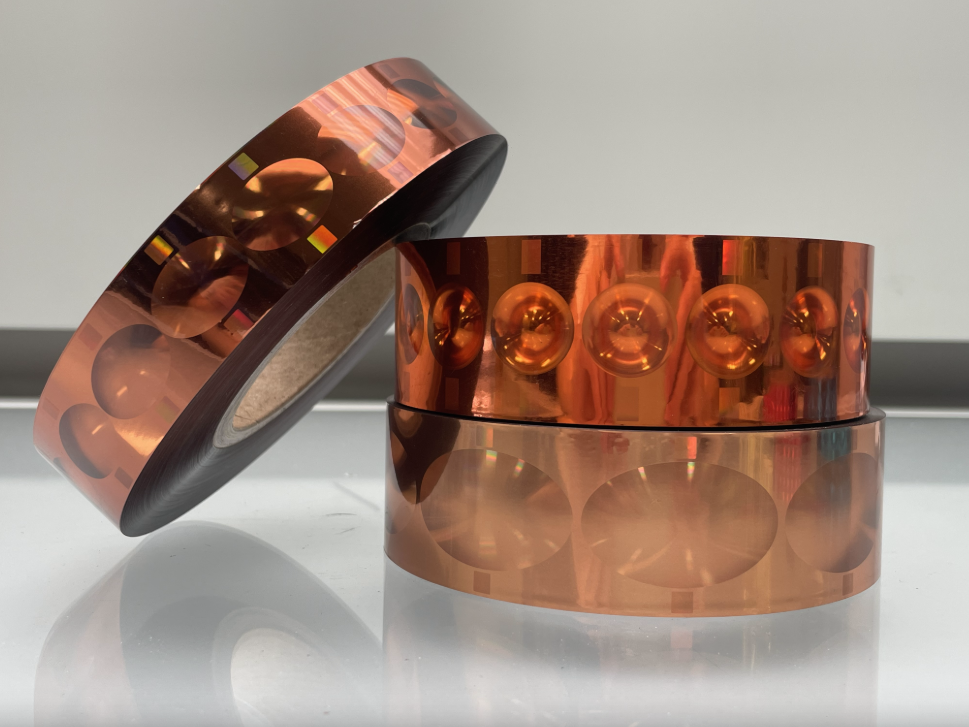
Hologram foil uses electron beam lithography, kinematic holography, dot matrix diffraction, and nanofabrication for secure high-definition packaging.
2026/09/11
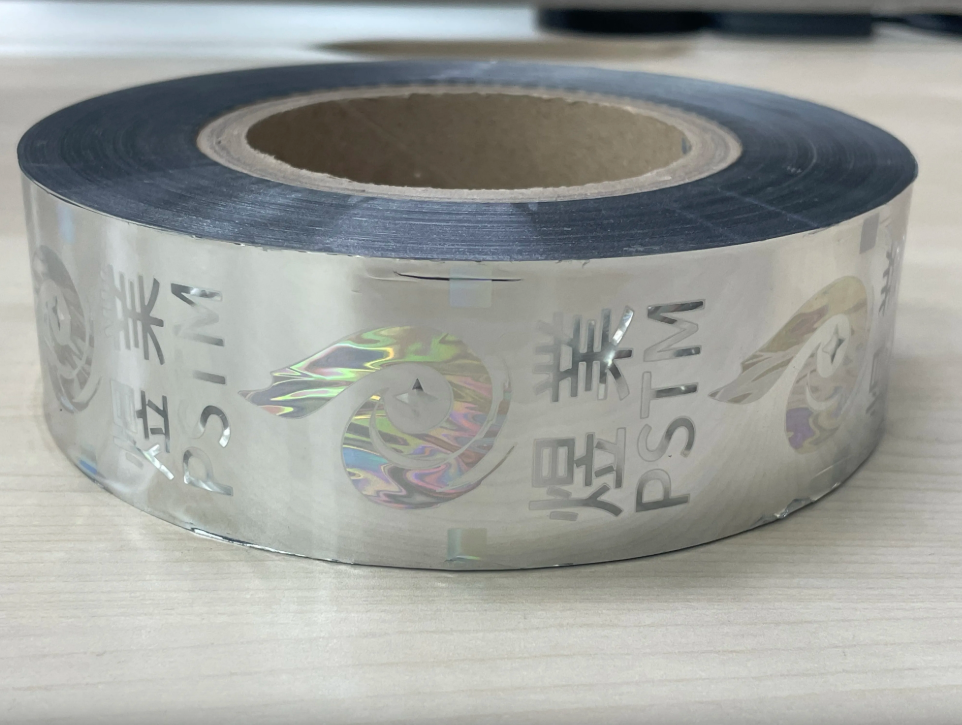
See how light shifts color and motion, adding secure visual effects that resist copying on printed cartons and retail labels for brands worldwide today.
2026/09/11
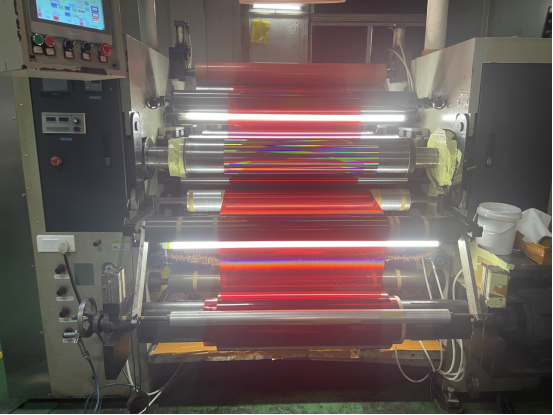
Learn how metal decoration works without heated dies, plus substrate limits and inline setup costs, quality control and output plans for packaging lines.
2026/09/11
Hot stamping foil uses heated dies; metallic ink prints via a printing process. Compare brilliance, adhesion, rub resistance, cost, substrate for decoration