EN
EN

What is the role of laser technology in anti-counterfeiting foil development?
2026/09/11
See how UV and femtosecond lasers write covert codes into anti-counterfeiting foils, plus CO2 demetallization limits and real-time process control.
2026/08/18
2026/08/18
Film substrates, polypropylene, polyethylene, polyester, and their various coated and treated variants, have taken over large swaths of the label and flexible packaging market. They offer clarity, durability, moisture resistance, and a premium look that paper cannot match. The same properties that make films attractive to brand owners, however, make them challenging for cold foil decoration. Paper is porous and naturally receptive to adhesives and coatings. Film is not. Its surface is smooth, non-absorbent, and chemically inert. Getting a UV adhesive to anchor properly and a cold foil to transfer cleanly onto a film surface requires a different set of process controls than what works on paper.
The starting point is surface energy. Most untreated films sit at a surface energy well below the threshold that UV adhesives need for proper wetting and adhesion. Without treatment, the adhesive beads up, reticulates, or pulls back from the edges, producing a foil transfer that looks ragged under magnification and patchy to the naked eye. The solution is not a single fix but a sequence of aligned decisions that begin before the press ever turns.
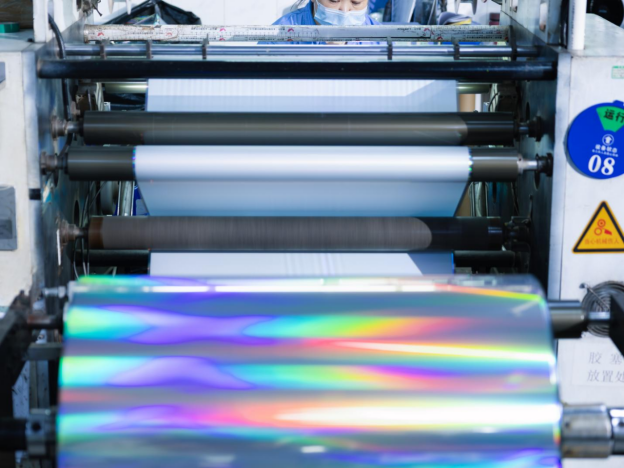
Corona discharge treatment is the most common method for raising film surface energy inline on a flexo press. The system passes the film web under a high-voltage electrode, which bombards the surface with ionized air and creates polar functional groups on the polymer chains. Those groups increase the surface energy into a range where the adhesive can wet and bond. The effect is temporary. Treated film left on a roll for weeks will gradually lose the treatment benefit as polymer chains rotate and the polar groups migrate into the bulk material. For this reason, corona treatment works best when positioned immediately ahead of the adhesive application station on press.
The treatment level required depends on the film type and the adhesive chemistry. A general principle holds that the substrate surface energy should exceed the adhesive surface tension by a comfortable margin. Untreated polypropylene, for instance, registers at a surface energy level that is too low for reliable adhesive anchoring. After proper corona treatment, the surface energy rises into a range where cold foil adhesives can perform effectively. Too little treatment and the adhesive will not anchor. Too much treatment can over-oxidize the surface and create a weak boundary layer that actually reduces bond strength. Measuring surface energy with test pens or solutions at the press, not just in the lab, helps catch treatment drift before it produces waste.
On paper, a cold foil adhesive can sink slightly into the fiber network, gaining a mechanical interlock that supplements the chemical bond. On film, there is no fiber network. The bond is purely chemical, relying on the adhesive formulation to grip the treated polymer surface and to hold the foil metallization layer after UV curing. Cationic UV adhesives tend to offer better adhesion to film substrates than free-radical formulations, though the choice depends on the specific film chemistry and the cure speed required by the press speed.
Adhesive film weight matters more on film than on paper. A film surface, being non-absorbent, holds the entire adhesive volume on top. Too much adhesive and the film becomes a skating rink where the foil slides during nip contact, smearing fine details. Too little adhesive and the coverage fails across solid areas, leaving pinholes that show up as un-metallized specks against backlit packaging. The anilox roller cell geometry and the doctor blade setup determine the film weight delivered to the plate. For film substrates, converters often select anilox volumes on the lower end of the range compared to paper, precisely because none of the adhesive wicks away.
Cold foil is not a single product. It is a category with internal variation, and the differences between foil formulations show up most clearly on film. A foil designed for general-purpose paper converting may have a release layer calibrated for the surface roughness and absorbency of coated board. On a smooth film, that same release layer can behave differently. The foil may release too easily, lifting at the edges of fine type, or not easily enough, requiring higher nip pressure that distorts the adhesive pattern.
The metallization layer also plays a role in the visual result on film. Because film is transparent, the foil's reflective layer is often visible from both the front and the back. Any inconsistency in the vacuum-metallized aluminum, pinholes, thin spots, or oxidation patches, becomes glaringly obvious when backlit or when the package is viewed against a light source. Foil formulations engineered for film applications typically use a higher-grade metallization with tighter defect tolerances, because the transparent substrate offers nowhere to hide.
| Process Variable | Paper Substrate | Film Substrate |
| Surface treatment required | Rarely needed (coated paper) | Corona or plasma treatment essential |
| Adhesive film weight | Moderate (some absorbency) | Lower (non-absorbent surface) |
| Adhesive chemistry preference | Free-radical or cationic | Often cationic for better grip |
| Foil release behavior | More forgiving | Sensitive to release coating formulation |
| Visual inspection criteria | Reflective surface only | Both reflective and backlit appearance |
One of the creative strengths of cold foil on film is the ability to overprint with translucent inks and create colored metallic effects with depth. Because the film substrate is transparent, the foil layer can sit between the substrate and the printed ink, or between two ink layers, depending on the design intent. Printing translucent process colors directly over a bright foil surface produces a vibrant colored metal look that changes character as the package moves under retail lighting.
The sequence matters. When foil goes down first and ink prints on top, the ink must adhere to the foil surface, which requires either a foil topcoat formulated for ink receptivity or a primer applied inline before the ink units. When ink prints first and foil goes on top, the adhesive must bond to the printed ink rather than to bare film, and the ink must be fully cured and free of surface contaminants like silicone slip agents that can interfere with adhesion. Each sequence has its place. The foil-over-ink approach tends to produce a slightly softer, more integrated metallic glow. The ink-over-foil approach delivers maximum reflectivity with the color sitting as a transparent tint layer.
Film substrates stretch. Polyethylene stretches more than polyester, and thin-gauge films stretch more than thick ones. That stretch, combined with the thermal sensitivity of some films to the UV curing lamps, creates registration challenges that do not exist on dimensionally stable paper. A film web that elongates slightly under tension between the adhesive station and the foil transfer nip can shift the foil pattern relative to the printed graphic by enough to be visible.
The countermeasures start with tension control. Running film at the lowest consistent tension that maintains web stability reduces stretch and the registration drift that comes with it. Chilled idler rollers after the UV curing station help remove heat before the film reaches the next print unit, minimizing thermal expansion. Some converters run an initial registration pass on film at reduced speed to establish the correct settings, then ramp up once the web is tracking stably. The extra minutes spent on setup pay back quickly in reduced waste across the run.
Film-based packaging often serves applications where the decorated surface faces tougher conditions than a paper label ever would. Stand-up pouches get flexed and crinkled during filling and handling. Shrink sleeves undergo a dramatic dimensional change during heat application. Flexible packaging for personal care products encounters lotions, oils, and alcohol-based solutions that can attack the foil bond line. A cold foil that looks perfect fresh off the press can fail in the field if the adhesive bond cannot survive the mechanical and chemical environment of the packaged product.
Testing foil adhesion on film means going beyond a simple tape test. A crinkle test, where the decorated film is repeatedly flexed and examined for foil lift or cracking, simulates the handling that a flexible package endures. Chemical resistance testing with the actual product formulation, whether a shampoo, a food sauce, or a cleaning solution, reveals bond degradation that no visual inspection can catch. For converters serving brands with high liability sensitivity, pharmaceutical, personal care, and food contact, this level of validation is not optional.
GL Foils provides cold foil solutions for film, focusing on release behavior, metallization quality, and surface receptivity. The right grade depends on the film, adhesive, printing sequence, and durability needs. For converters moving from paper to film, a technically knowledgeable foil supplier reduces the costly trial-and-error on early jobs.
2026/09/11
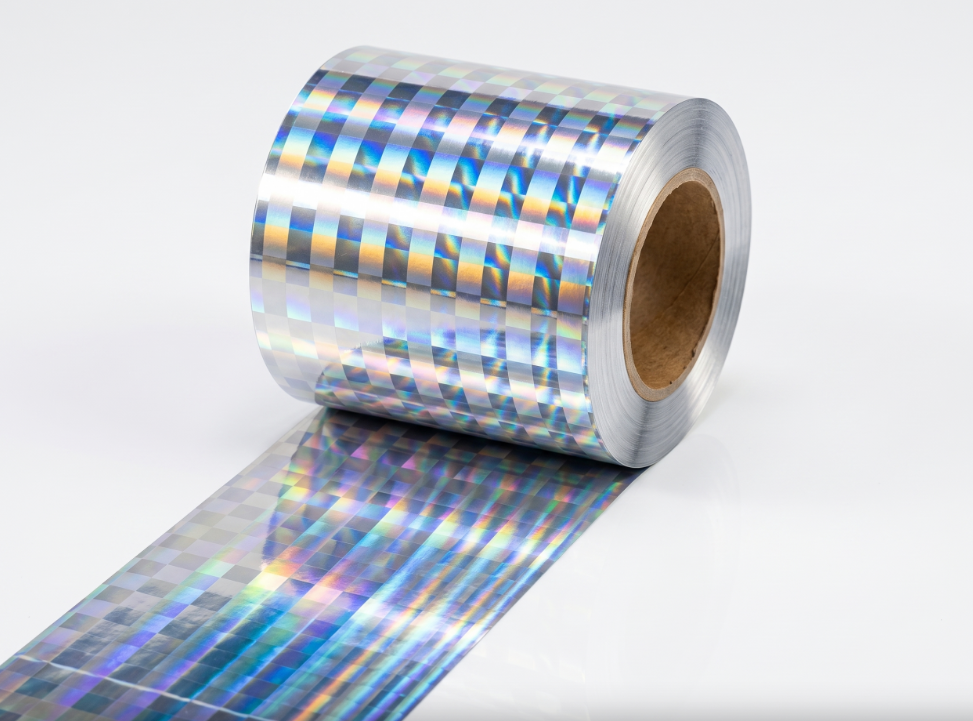
See how UV and femtosecond lasers write covert codes into anti-counterfeiting foils, plus CO2 demetallization limits and real-time process control.
2026/09/11
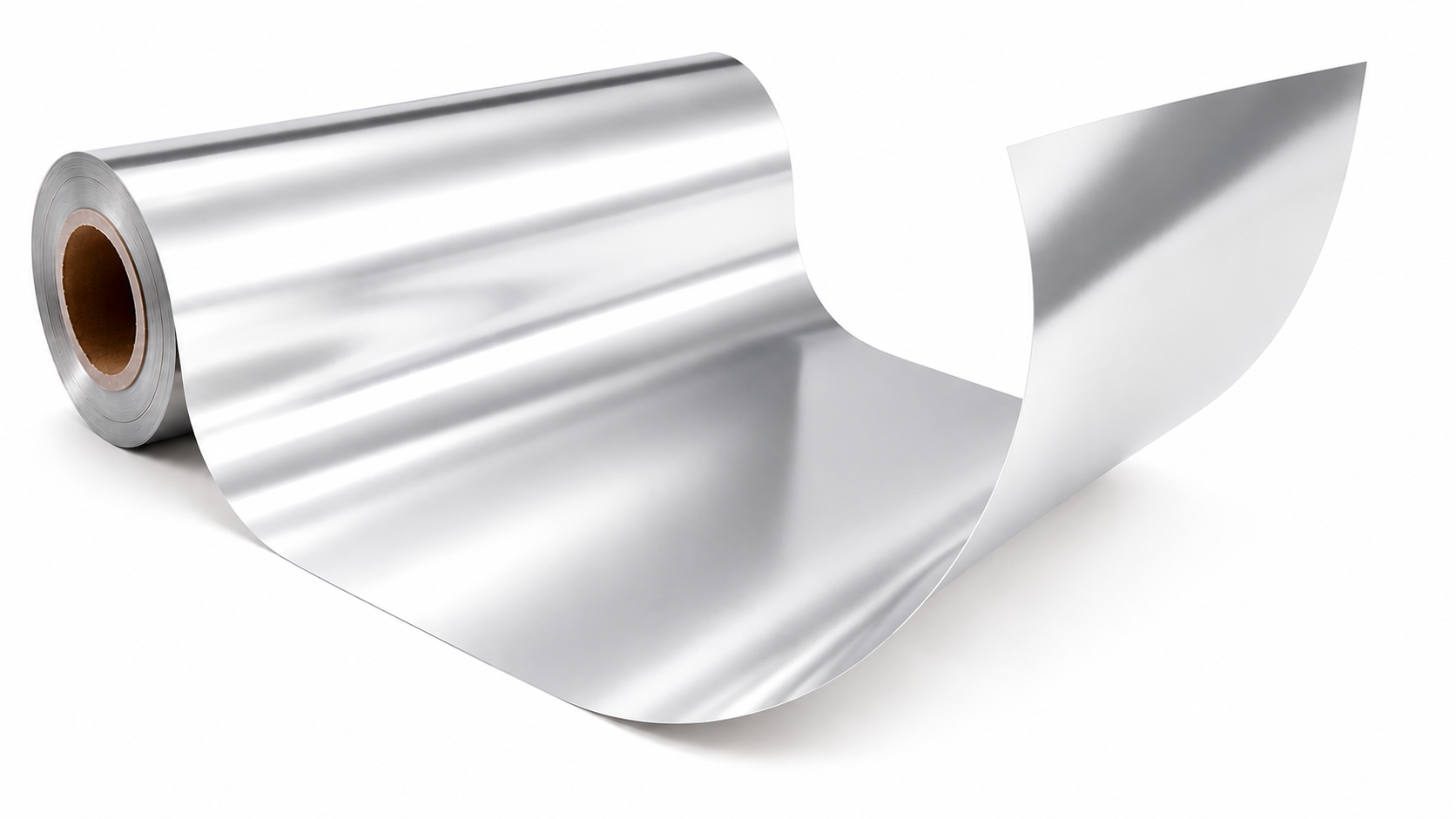
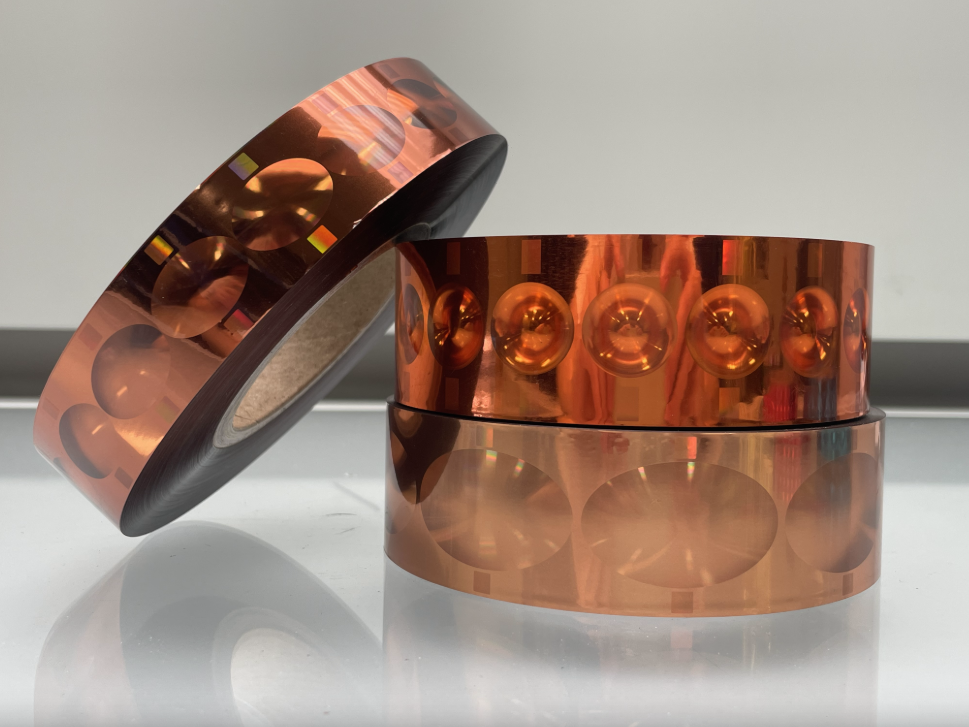
Hologram foil uses electron beam lithography, kinematic holography, dot matrix diffraction, and nanofabrication for secure high-definition packaging.
2026/09/11
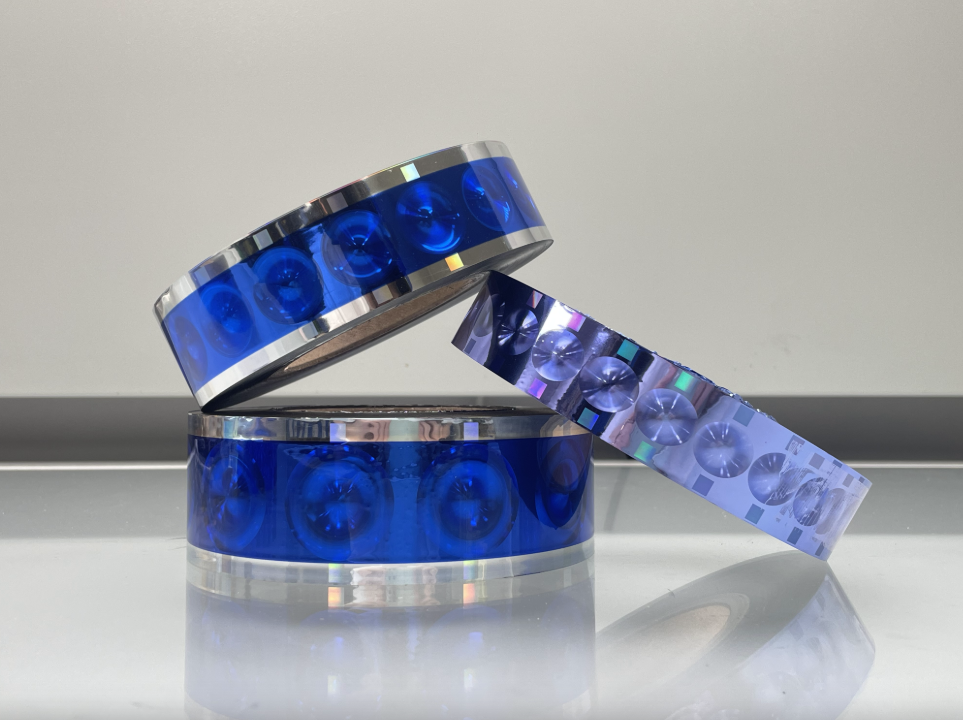
See how light shifts color and motion, adding secure visual effects that resist copying on printed cartons and retail labels for brands worldwide today.
2026/09/11
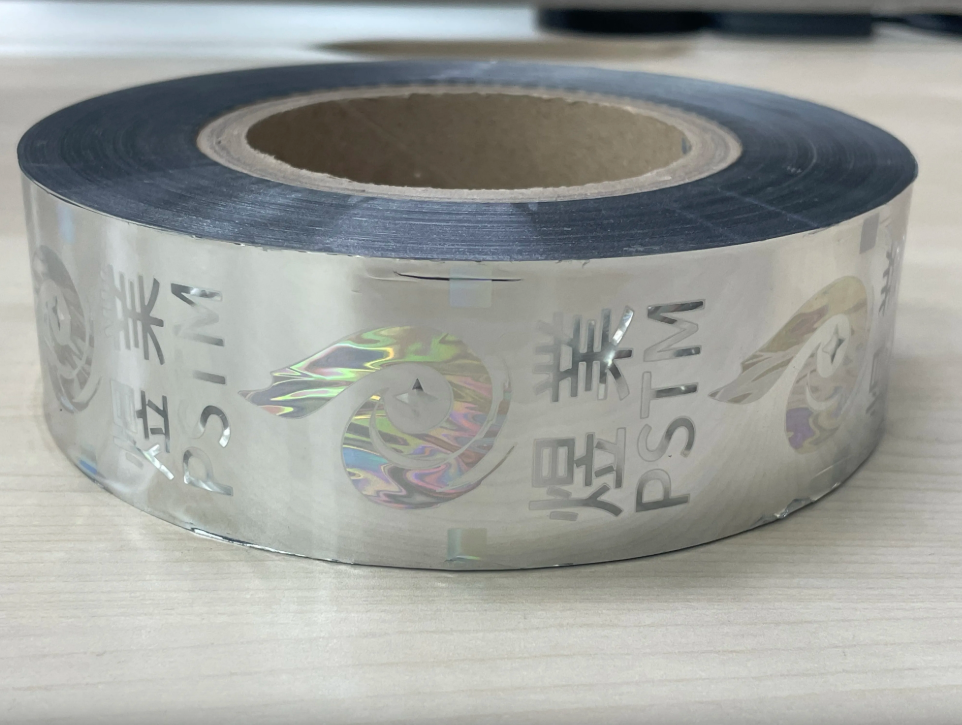
Security holograms and holographic labels add overt protection. Learn optics, foil, design, pitfalls, limits, and fake risks in real world use.
2026/09/11
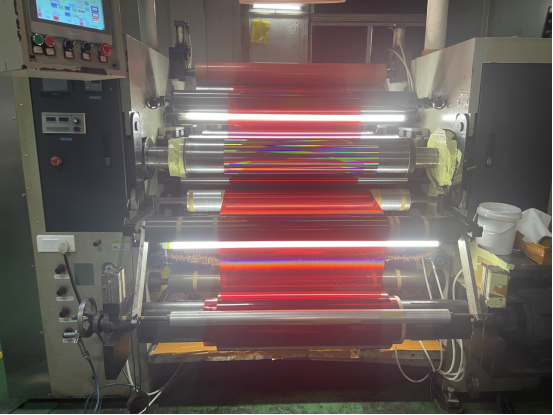
Learn how metal decoration works without heated dies, plus substrate limits and inline setup costs, quality control and output plans for packaging lines.
2026/09/11
Hot stamping foil uses heated dies; metallic ink prints via a printing process. Compare brilliance, adhesion, rub resistance, cost, substrate for decoration