EN
Hot Stamping Foil on UV-Varnished Cartons: What Buyers Should Check
2026/10/28
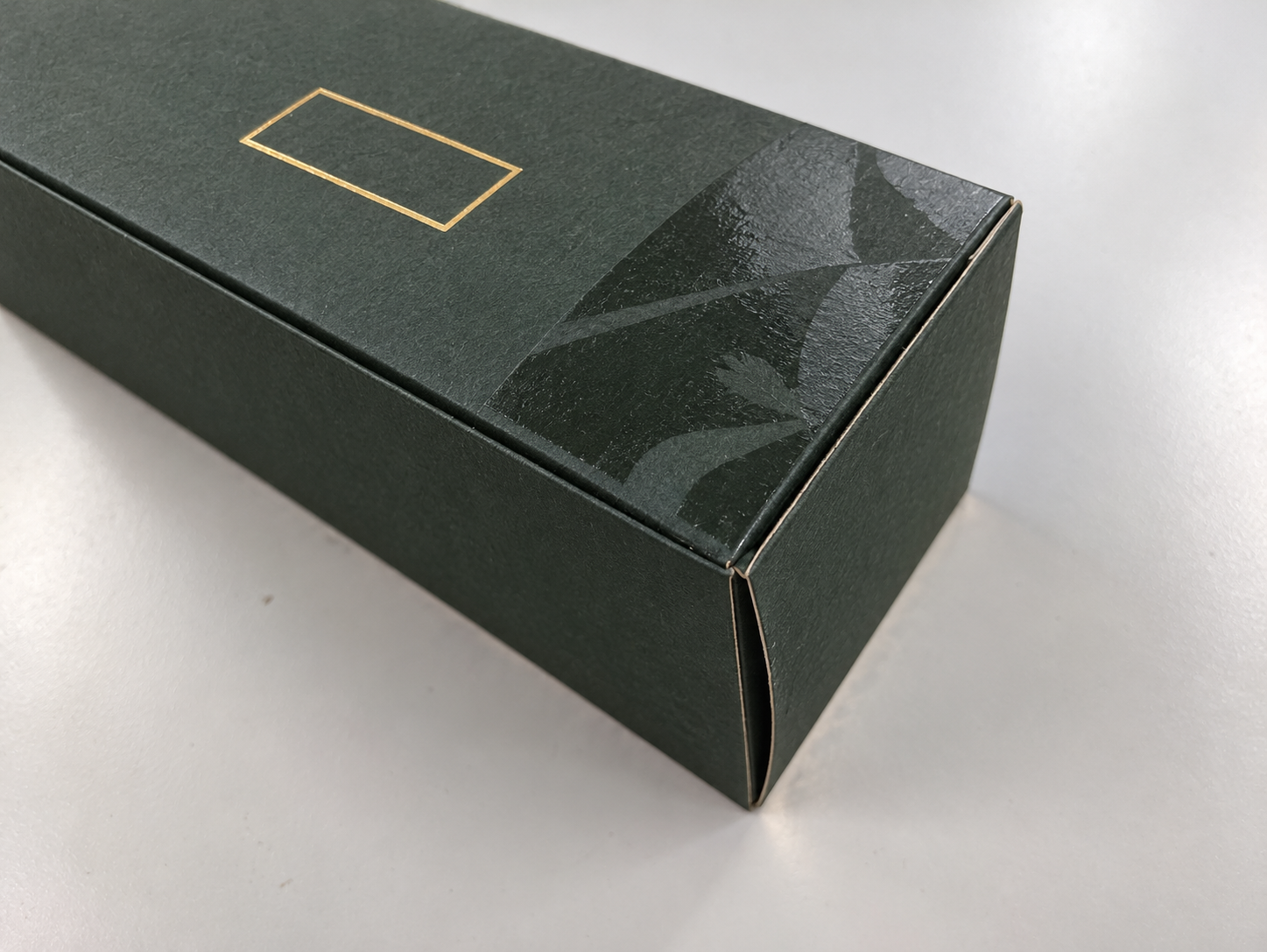
Gold foil can be stamped on selected UV-varnished cartons, but the surface and foil must match. Learn what to check before approving a finished box.
2026/09/21
2026/09/21
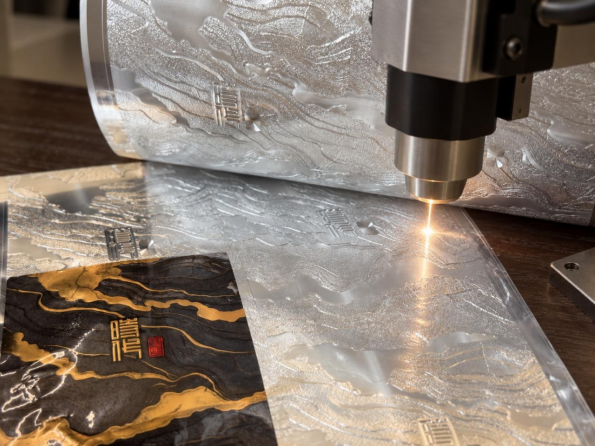
Holographic patterns on stamping foils look decorative, but the production challenge is time, repeatability, and feature size. A pattern whose origination cycle runs into days can hold up a packaging launch. A master that shifts dimensions after nickel electroforming carries that offset into every replica, where it can appear as a visible seam or a bright band across the transferred pattern. The bottleneck is rarely the concept art. It is the step where the optical structure is physically written into a master surface.
Traditional origination often uses mask-based photolithography or two-beam interference. Both deliver detail, yet both are tied to long setup cycles. A new layout may need a new mask, fresh optical alignment, or a new chemical recipe. Laser technology changes that equation by turning much of the work into a digital, non-contact operation. A laser system writes the pattern under software control instead of committing to a fixed mask. That shift matters because a registered holographic program ties the optical pattern to the artwork repeat, so any change to the graphic is also a change to the origination file.
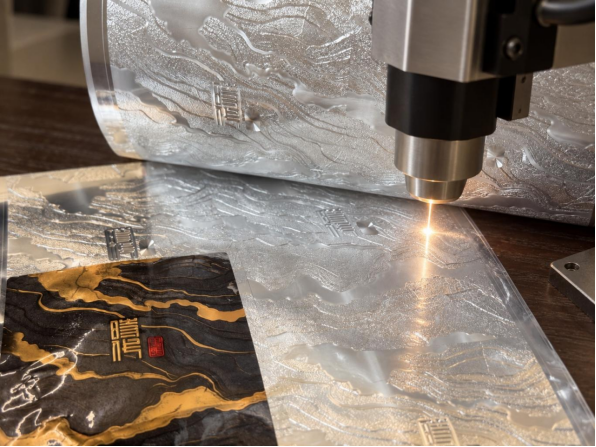
In a conventional workflow, the pattern is designed, exposed onto photoresist, developed, and electroformed into a nickel shim. Direct laser writing compresses several steps. A focused beam exposes the resist according to a digital file, so edits do not wait for a new mask. The gain from laser technology is not only speed. It is version control. When a brand asks for a small change in a security graphic, the file can be adjusted and rewritten on the same platform. Sampling becomes cheaper, and multiple features can be tested before production.
|
Method
|
Resolution level
|
Setup for new design
|
Flexibility
|
Main bottleneck
|
|
Mask-based photolithography
|
Moderate
|
Longer
|
Low to medium
|
Mask fabrication
|
|
Two-beam interference
|
Moderate to high
|
Medium
|
Low, periodic gratings only
|
Optical stability
|
|
Direct laser writing
|
Moderate to high
|
Shorter
|
High
|
Writing speed
|
|
Electron-beam writing
|
Very high
|
Longer
|
High
|
Cost and vacuum environment
|
The table compares general tendencies rather than fixed specifications. Laser direct writing rarely beats electron-beam on absolute resolution. It wins on a balanced mix of resolution, turnaround, and digital control. For holographic stamping foils, that balance often matters more than an extreme specification.
Not every laser process is the same. A continuous-wave laser heats a surface broadly, which is risky for shallow, periodic holographic masters. Ultrafast lasers, including picosecond and femtosecond sources, deliver energy in very short pulses. Material is removed before heat spreads widely. This is often called cold ablation, though the term is a simplification.
Wavelength also matters. Ultraviolet lasers focus to smaller spots, which helps fine grating periods. Green and infrared lasers may offer higher average power, but they can create a larger heat-affected zone on certain resists or metal layers. Research groups such as the Fraunhofer Institute for Laser Technology work on ultrashort-pulse ablation and on laser-written optical structures, where pulse duration and fluence decide how much heat reaches the material around the spot. In origination, a clean ablation edge means less post-processing and fewer defects that survive into the nickel shim.
A mask-based workflow adds a mask fabrication and realignment step ahead of every new layout, so the front end of the schedule is set by tooling rather than by the writing platform. Moving the exposure step to a UV direct-write system can shorten that front end, but it does not remove every constraint. The writing platform still depends on resist thickness, ambient humidity, and beam stability. Without tight control, written lines become uneven.
Electroforming also remains a long step. A digital file can be scaled before writing to compensate for shrinkage during nickel growth, which helps alignment. Yet the nickel bath, current density, and cleanroom discipline still determine how faithfully the pattern transfers. Laser technology improves the front end of origination. It does not replace the physics of electroforming or the need for process control.
Origination and foil supply are two stages, and the boundary between them is the approved master. Laser writing, development, and electroforming belong to the origination trade, which fixes feature size, grating period, and the optical effect itself. A foil manufacturer works from that approved master, and the work changes character at that point. The pattern has to be replicated onto a carrier film, matched to an adhesive route, and transferred to a defined position on a pack without losing the registration that makes a security feature readable.
The second stage carries its own vocabulary and its own tolerances. On a registered hot stamping line an optical sensor tracks a printed mark and holds a registration tolerance of ±0.1 mm. On a registered cold foil line the adhesive image leads, and the press has to keep the artwork repeat, the sensor mark, the adhesive image and the foil repeat synchronized, with transfer depending on adhesive cure, nip contact, web tension and registration stability.
The two stages also fail differently, which is what makes the boundary worth keeping in view. A defect that is written into the master is replicated with it and appears on every print, while a transfer fault appears only under the conditions that produced it, which points back to tension, adhesive coverage or cure.
Laser technology is not a universal replacement for every holographic origination method. A mature mask-based line can still be cost-effective. For feature sizes at the extreme end of the range, where a holographic grating approaches the resolution limit of optical writing, electron-beam writing may be the better tool. Laser processing also demands investment in beam stabilization, motion control, and operator training.
Buyers of holographic stamping foils should ask questions that map onto the stage they are buying from. How is the master originated? What is the smallest feature that can be reproduced consistently across a full roll? How is registration held, and to what tolerance? How does the supplier control stitching and shrinkage between the master and the replicated foil? What testing method verifies the optical effect after lamination? A converter should ask which stage a claimed gain applies to, because a faster origination cycle and a faster transfer cycle solve different problems. Frameworks such as ISO 22383:2020 set out how authentication solutions are selected and how their performance is evaluated, and ISO 14298:2021 covers the management of security printing processes, so each gives a buyer a structured basis for questioning the security features on a foil, from a cat-eye lens to a one-item-one-code mark with micro-text encryption.
GL Foils has manufactured stamping foils since 2008, with in-house R&D, testing and inspection centers and a broad foil portfolio. Its holographic range covers hot stamping, cold foil, screen and digital routes, together with cat-eye registered and custom registered constructions, so an approved master can be matched to a foil and a transfer route from a single source.
2026/10/28
Gold foil can be stamped on selected UV-varnished cartons, but the surface and foil must match. Learn what to check before approving a finished box.

2026/10/26
Gold foil can look perfect on a flat carton and crack after folding. See what to check in the artwork, board, crease and finished sample.
2026/10/27
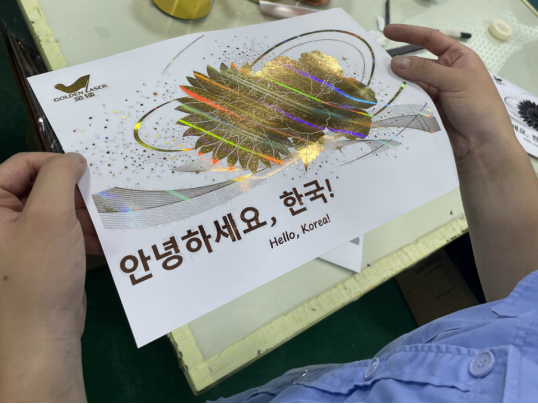
Hot stamping foil delivers metallic and holographic decoration for packaging, with reliable release, adhesion, and press performance.
2026/10/26
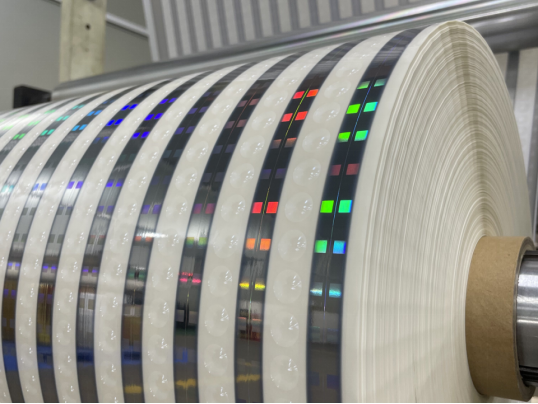
Holographic foil and hologram technology add layered authentication to packaging, supporting brand protection with verifiable optical security.
2026/10/23
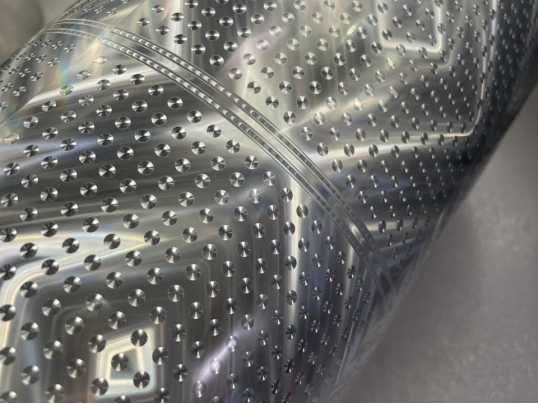
Holographic foil and hot stamping elevate packaging perceived value with consistent optical effects for premium cartons.
2026/10/22
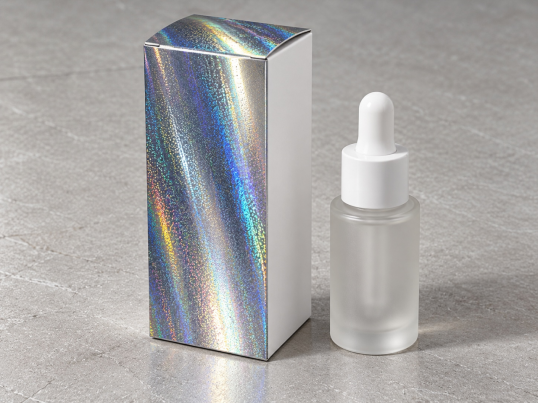
Holographic paper for cosmetic cartons adds light-shifting effects, foil stamping performance, and premium shelf appeal for beauty packaging.