EN
EN

What is the role of laser technology in anti-counterfeiting foil development?
2026/09/11
See how UV and femtosecond lasers write covert codes into anti-counterfeiting foils, plus CO2 demetallization limits and real-time process control.
2026/08/15
2026/08/15
Shoppers make split-second decisions. A row of products on a shelf gets scanned, not read, and the brain filters out anything that blends into the visual noise. Packaging designers know this. They talk about the "grab test," the moment a hand reaches for one product instead of its neighbor. Winning that test rarely comes down to the product inside. It comes down to how the package catches and holds light.
Holographic foil earns its place on the shelf precisely because it plays with light in ways that matte inks and standard metallics cannot. A flat printed surface reflects light uniformly. A holographic surface breaks light into spectral components and shifts the pattern as the viewing angle changes. The human eye is wired to notice movement and contrast. A holographic package triggers both responses simultaneously. It flashes, shifts, and shimmers as a shopper walks past, and that dynamic signal cuts through the static background of a crowded shelf.
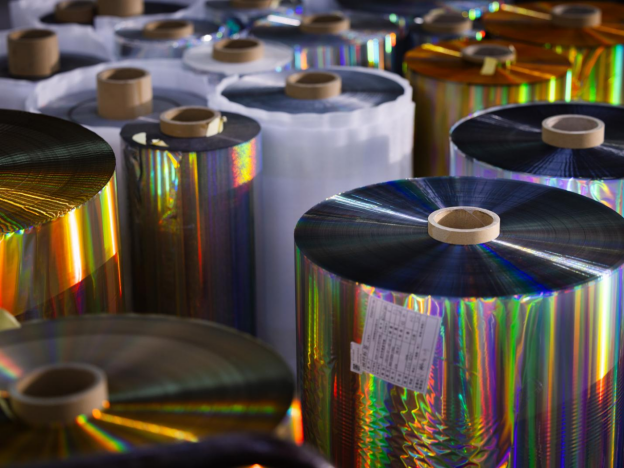
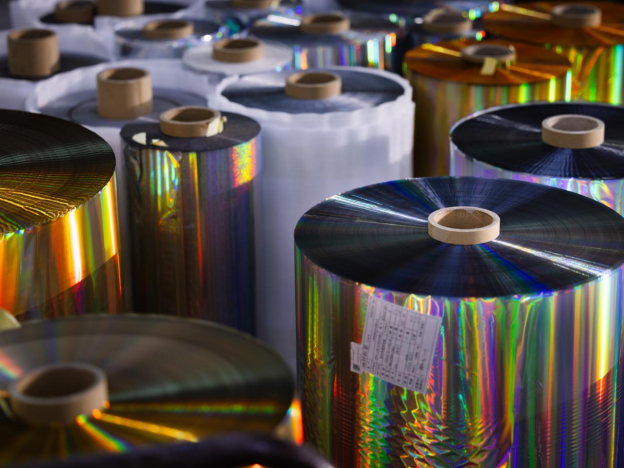
The visual magic of holographic foil starts with a physical structure, not a pigment. The foil carries a microscopically fine embossed pattern, a diffraction grating, on its surface. When white light strikes this surface, the grating splits it into its constituent wavelengths, the colors of the rainbow, and directs each wavelength at a slightly different angle. Change the viewing angle by a few degrees, and a different wavelength hits the eye. The result is a color-shifting, depth-filled appearance that no flat ink can replicate.
A full holographic foil stack includes several functional layers. A polyester carrier film provides mechanical support during handling and stamping. A release layer allows the foil to transfer cleanly from the carrier to the substrate under heat and pressure. A lacquer layer receives the embossed holographic pattern and protects it after transfer. A vacuum-metallized aluminum layer provides the reflectivity that makes the diffraction visible. A size coat or adhesive layer bonds the foil to the substrate. Each layer contributes to the final appearance and performance. A foil with a poorly formulated release layer drags or tears during stamping, ruining the fine holographic detail. One with inconsistent metallization looks patchy under retail lighting. The difference between a stunning holographic finish and a disappointing one often traces back to coating quality control at the foil manufacturing stage.
In practical packaging reviews, reflective and high-contrast elements are often noticed before quieter matte areas. A shopper scanning a shelf of wine bottles, cosmetic boxes, or confectionery cartons fixates on the package with metallic or holographic accents faster than on matte-finished equivalents. In a retail environment where the average dwell time in front of a category shelf is brief, that split-second advantage is real competitive territory.
The psychological signal sent by holographic foil goes beyond attention capture. There is a perceived value transfer. Consumers associate holographic finishes with premium quality, authenticity, and technological sophistication. A folding carton for a mid-tier skincare product gains a luxury connotation when the logo and border carry a holographic foil stamp. A spirits label with a holographic medallion reads as more authentic and harder to counterfeit. The foil does not just make the package visible. It makes the product inside feel worth a higher price point.
In a crowded shelf presentation, a holographic foil accent can create a moving contrast that is easier to notice than a uniformly matte area. A human eye scanning a crowded shelf instinctively jumps to the point of highest visual contrast. A holographic foil patch, because it shifts color and brightness with even slight head movement, generates a dynamic contrast that static inks cannot match.
The commercial consequence is straightforward. A package that gets noticed in the first second of a shelf scan enters the shopper's consideration set. A package that blends into the background gets skipped before any evaluation of product quality or price takes place. For brands in crowded categories, confectionery, cosmetics, spirits, and personal care, the holographic accent functions as a silent salesperson that works when a human shopper is not consciously paying attention. The foil does not argue about ingredients or benefits. It simply ensures the package gets seen.
Holographic foil does not simply stick to a package. It transfers under precisely controlled heat, pressure, and dwell time through a stamping die, and the variables multiply quickly. Different paper stocks absorb heat at different rates. Coated boards release the foil more cleanly than uncoated kraft. Curved surfaces, common on spirits bottles and cosmetic jars, demand foil formulations with enough elongation to conform without cracking. Fine type and thin rules, design elements that brand guidelines love, push against the resolution limits of the embossing and transfer process.
Flat stamping onto a smooth, coated board is the easiest scenario. Vertical stamping onto a curved bottle label raises the difficulty. Hot stamping onto a substrate that has already been printed with UV-cured inks adds another layer of complexity because the surface energy of the printed area may differ from the bare substrate, affecting foil adhesion. Each of these scenarios requires a foil with a specific release and adhesive formulation. A foil that runs beautifully on a flat carton line might micro-crack on a curved cosmetic compact. The correlation between foil chemistry and substrate compatibility is where packaging engineers earn their keep.
A holographic foil that looks stunning on a freshly stamped sample can degrade through the supply chain in ways that disappoint the brand team on unboxing. Scuffing during transit, when cartons vibrate against each other in a shipping case, can dull the holographic brightness. Exposure to humidity in a non-climate-controlled warehouse can lift the foil edge on board stocks with high moisture absorption. Certain essential oil-based fragrances in premium soaps and candles can migrate through board and soften the adhesive layer over time.
The countermeasures are not exotic. A scuff-resistant topcoat applied over the foil adds a layer of mechanical protection. Foil formulations designed for high-humidity environments use adhesive systems that resist moisture penetration at the edge. For fragrance migration, a barrier coating on the inside of the carton prevents the volatiles from reaching the foil in the first place. These details rarely make it into a design brief, but they determine whether the package still looks premium when a consumer picks it up from a store shelf three months after it left the converting line.
GL Foils approaches these challenges through coating development, product testing and grade selection for different stamping conditions and substrate types. This application-focused process helps packaging teams avoid treating every substrate and artwork combination as if it required the same foil construction. For packaging converters and brand owners who measure success at the retail shelf, that kind of coating-level expertise helps turn a design concept into a package that performs consistently from the press room to the point of purchase.
2026/09/11
See how UV and femtosecond lasers write covert codes into anti-counterfeiting foils, plus CO2 demetallization limits and real-time process control.
2026/09/11
Hologram foil uses electron beam lithography, kinematic holography, dot matrix diffraction, and nanofabrication for secure high-definition packaging.
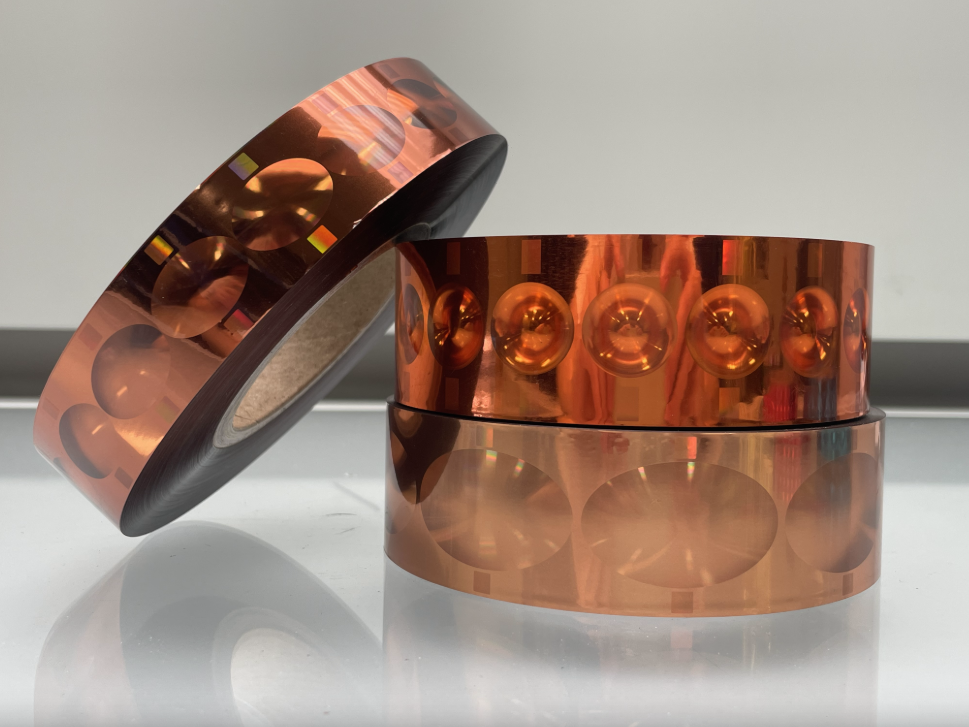
2026/09/11
See how light shifts color and motion, adding secure visual effects that resist copying on printed cartons and retail labels for brands worldwide today.
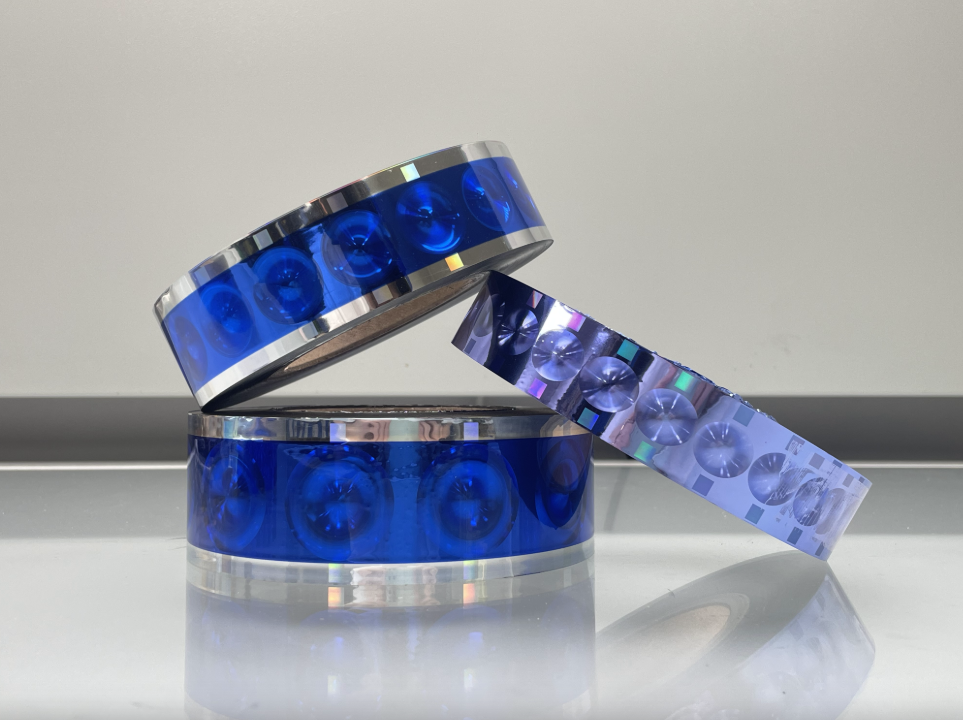
2026/09/11
Security holograms and holographic labels add overt protection. Learn optics, foil, design, pitfalls, limits, and fake risks in real world use.
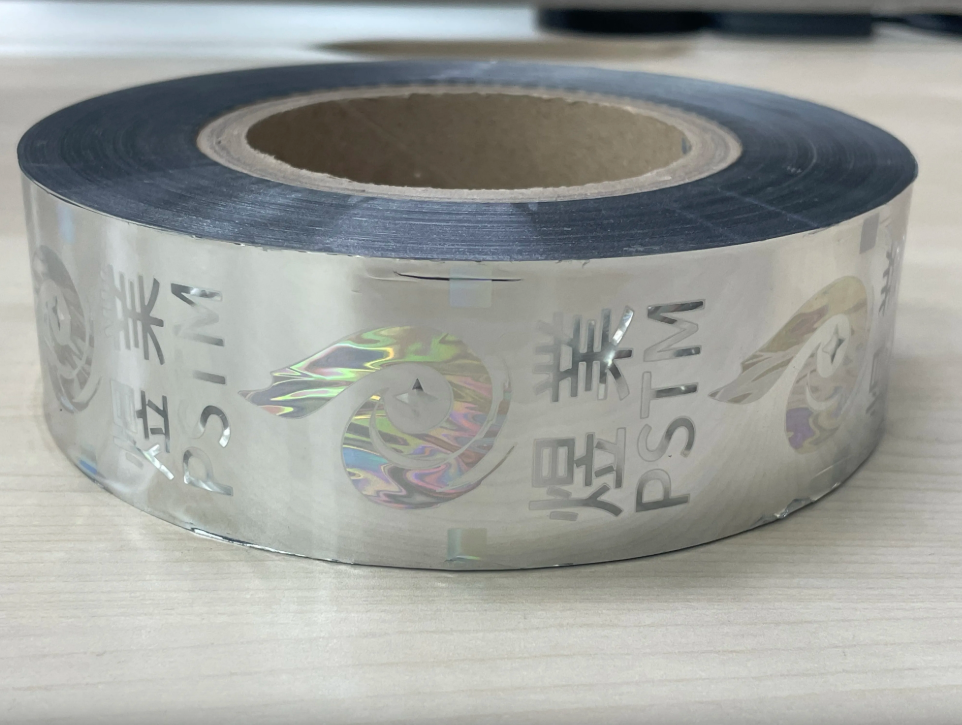
2026/09/11
Learn how metal decoration works without heated dies, plus substrate limits and inline setup costs, quality control and output plans for packaging lines.
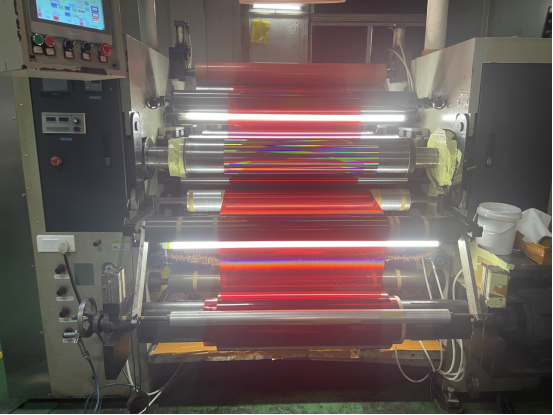
2026/09/11
Hot stamping foil uses heated dies; metallic ink prints via a printing process. Compare brilliance, adhesion, rub resistance, cost, substrate for decoration