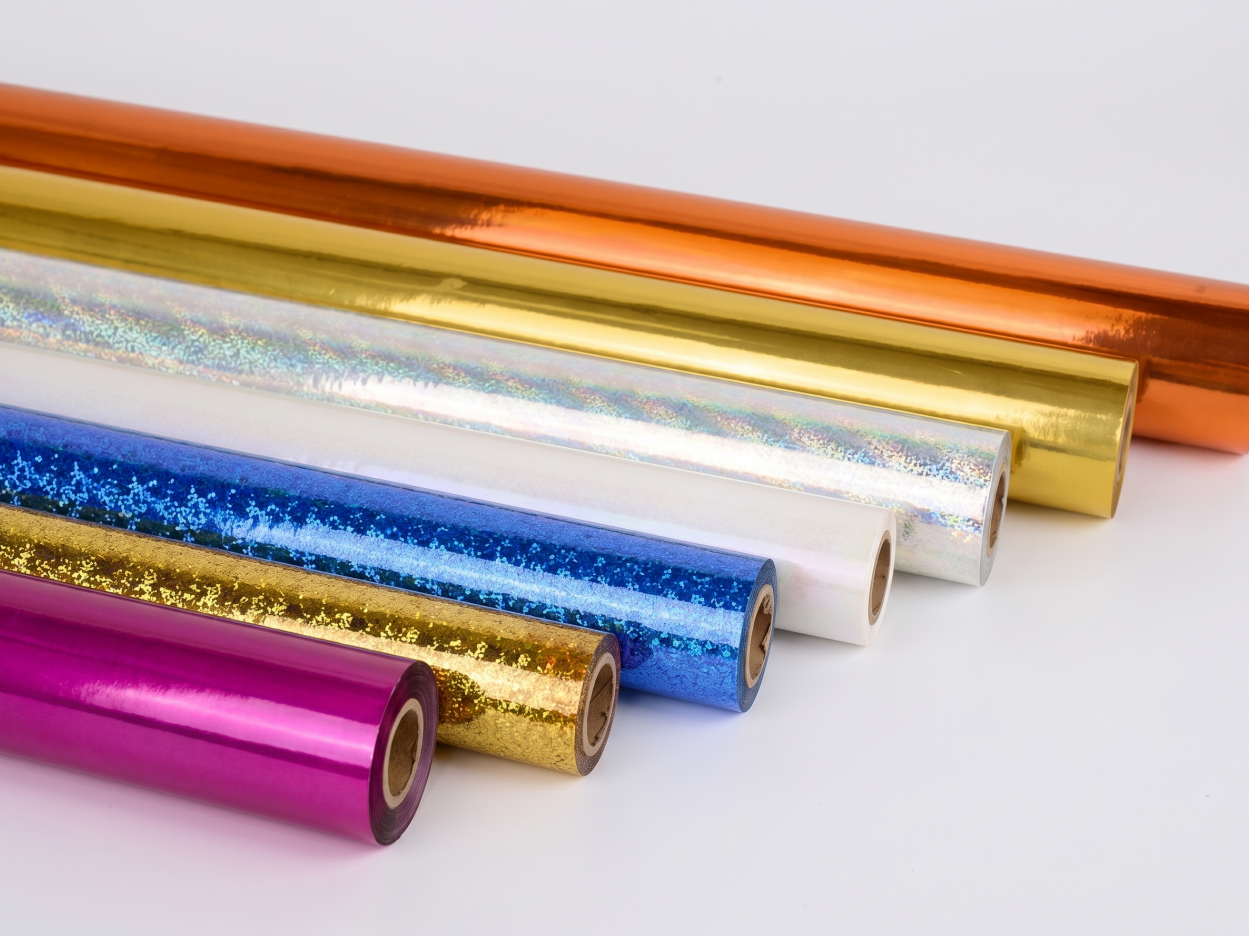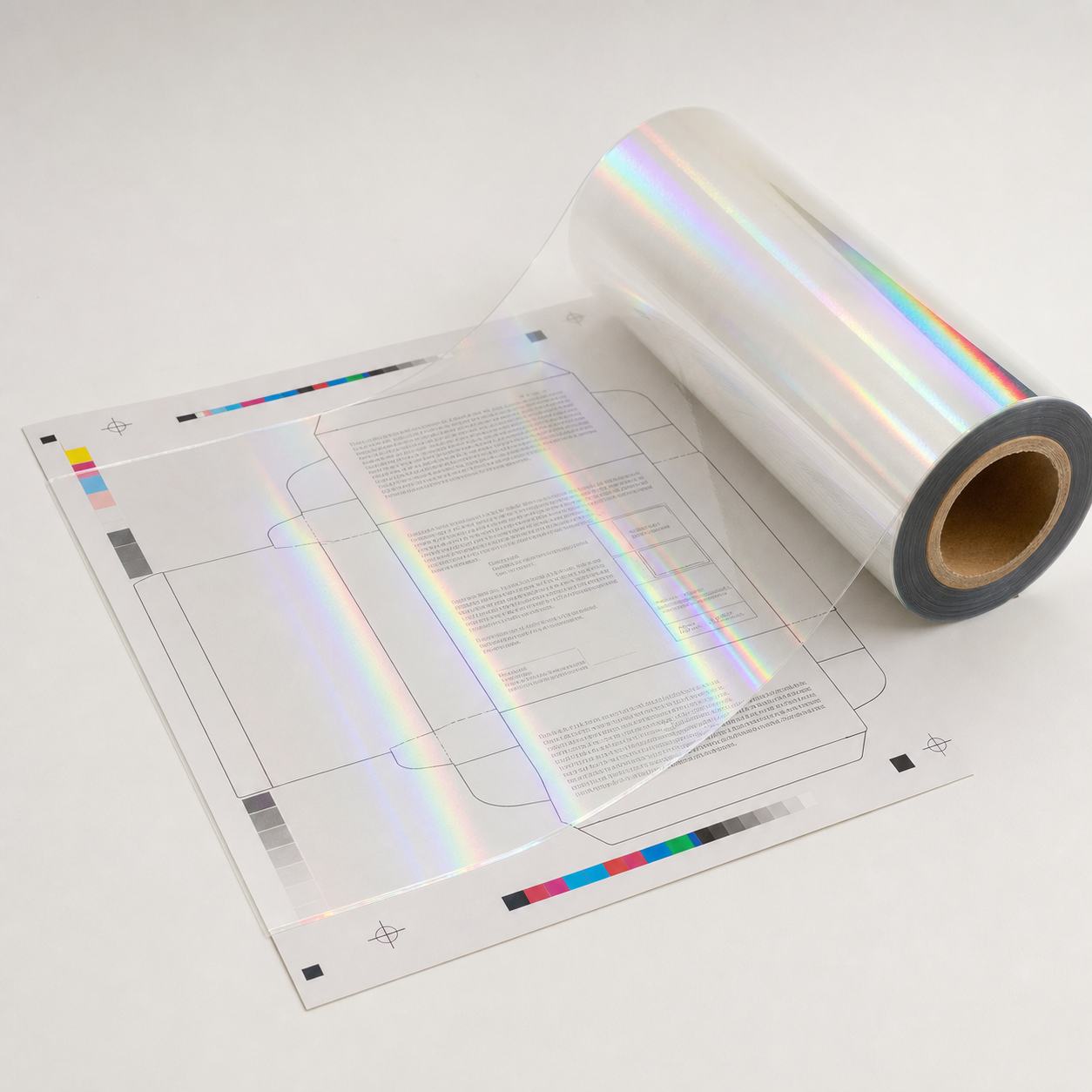
A transparent holographic flexo cold foil for labels that combine visible printed color with rainbow diffraction. Designed for transparent holographic effects in narrow-web cold foiling, it is matched to the actual substrate, machine, graphic area and downstream converting sequence. Available finishes include Transparent holographic diffraction with optional optical patterns. Typical applications include clear labels, beverage labels, cosmetics, personal-care packaging and designs that combine base printing with holographic light.
A transparent holographic flexo cold foil for labels that combine visible printed color with rainbow diffraction. Transparent diffraction over printing; Inline flexo cold foil compatibility; Suitable for clear or colored label designs.
Inline flexo cold foiling of a transparent holographic effect over printed labels and films. No heated die is required; UV adhesive, curing and surface treatment control transfer. The effect remains visually transparent so the printed design stays visible. Adhesive uniformity and web cleanliness support consistent diffraction.
Clear labels, beverage labels, cosmetics, personal-care packaging and designs that combine base printing with holographic light
Coated paper, PE, PP, PET and compatible transparent or printed label films
Store sealed in the original packaging, away from direct sunlight, heat and humidity. Recommended storage is 5-35°C. Use within 12 months from shipment and keep long rolls supported horizontally.
Transparent Holographic Flexo Cold Foils add a moving diffractive layer while allowing printed color and artwork to remain visible. The CR2J route is intended for narrow-web labels and compatible films where an opaque metallic panel would cover too much of the design. A transparent holographic foil behaves as an optical overlay, so its final appearance must be approved over the real printed base color.
The product is transferred inline with a UV-curable cold-foil adhesive. No heated die is required. Adhesive film weight, curing energy, nip pressure, web tension and surface treatment determine whether the transparent holographic transfer foil reproduces a clean, uniform pattern at production speed.
| Parameter Attribute | Technical Specification / Production Value |
|---|---|
| Product Category | CR2J transparent holographic flexo cold foil |
| Application Method | Inline flexographic cold foiling over approved printed labels and films |
| Processing Range | No heated die; UV adhesive, curing, nip and web tension control transfer |
| Production Speed | Approximately 30-150 m/min, subject to adhesive, substrate and graphic area |
| Carrier / Film | PET carrier for transparent holographic cold foil transfer |
| Standard Width | 640mm and 1280mm standard widths; custom slitting available |
| Roll Length | 6,000m standard production roll; other lengths available by order |
| Available Finishes | Transparent holographic diffraction with selected optical patterns |
| Suitable Substrates | PE, PP, PET and compatible transparent or printed label films |
| Storage | Store sealed away from sunlight, heat and humidity at 5-35°C; use within 12 months and support long rolls horizontally |
A transparent holographic foil does not provide the same hiding power as silver or gold metallized foil. Its purpose is to preserve the base artwork and add angular diffraction. Dark printed areas normally create stronger contrast, while pale backgrounds produce a quieter effect. The same roll can therefore look different across several SKUs even when the foil and pattern remain unchanged.
Approve the transparent holographic transfer foil on the intended ink set and substrate. A white-card swatch is useful for comparing patterns, but it cannot predict the effect over a blue beverage label, a cosmetic illustration or a clear film. Physical proofs should be viewed under diffuse light, direct retail light and the expected shelf angle.
Supply a separate vector layer for the flexo cold foil area. Define knockouts, overlaps and registration tolerance before plates are made. Dense diffraction can interfere with barcodes, QR codes and small reverse type, so critical information should remain outside the strongest optical zones unless a press proof confirms reliable scanning and reading.
Pattern scale should follow the size of the label and normal viewing distance. Fine patterns create texture across small areas; broader rainbow structures produce more visible movement but can dominate compact artwork. The transparent holographic foil should support the brand hierarchy rather than compete with every printed element.
The adhesive image becomes the boundary of the transferred effect. Uneven laydown can create dull patches, broken edges or weak solids. Excess adhesive can squeeze outside the design; insufficient adhesive or incomplete UV cure can reduce anchorage. Select the anilox, plate, nip and lamp output as one flexo cold foil system.
PE and PP normally require confirmed surface treatment. PET, synthetic label stock and other non-absorbent materials also need a clean, stable surface. Dust, silicone, low dyne level or an incompletely cured ink layer can interrupt wetting. Test the finished print sequence because the receiving layer, not only the base film name, determines transfer.
A later gloss varnish may intensify the transparent holographic foil, while a matte varnish can soften it. Lamination may protect the surface but can reduce diffraction depending on film clarity, adhesive and thickness. If overprinting crosses the foil, confirm ink anchorage and curing on the transferred surface.
Run the tests that match the package: dry rub, damp rub, squeeze, chilling, alcohol wipe, abrasion, die cutting and label application. Record the foil pattern, substrate, adhesive, curing condition and finishing stack with the approved sample so production repeats the entire construction rather than only the visible effect.
This CR2J route is for a transparent optical overlay that preserves the underlying printed color or artwork. If the design requires an opaque or strongly metallic visible holographic layer instead, review Holographic Flexo Cold Foils.
Q1: Is transparent holographic foil the same as silver cold foil?
A1: No. Silver foil provides an opaque reflective base. Transparent holographic foil keeps the printed artwork visible and adds diffraction over it.
Q2: Why does the same foil look different on each color?
A2: The printed base remains visible and changes contrast with the optical pattern. Approve the effect on every important background or SKU family.
Q3: Which process variables matter most?
A3: Adhesive laydown, UV cure, nip pressure, web tension, surface treatment and cleanliness work together to determine transfer and clarity.
Q4: Can the finished label be varnished or laminated?
A4: Yes, after qualification. The added layer can change gloss, diffraction and adhesion, so test the complete production stack before approval.
A transparent holographic flexo cold foil for labels that combine visible printed color with rainbow diffraction. Designed for transparent holographic effects in narrow-web cold foiling, it is matched to the actual substrate, machine, graphic area and downstream converting sequence. Available finishes include Transparent holographic diffraction with optional optical patterns. Typical applications include clear labels, beverage labels, cosmetics, personal-care packaging and designs that combine base printing with holographic light.