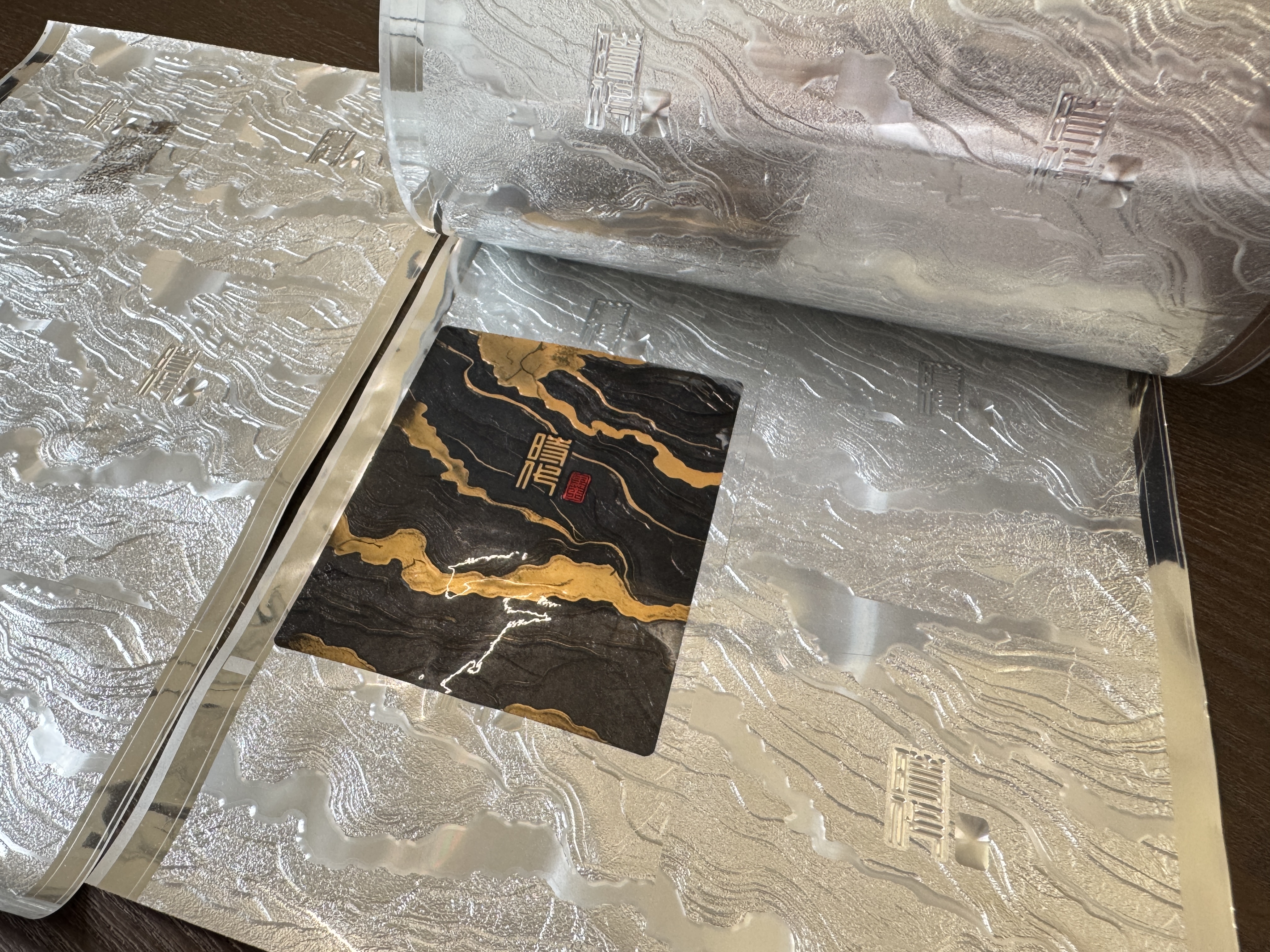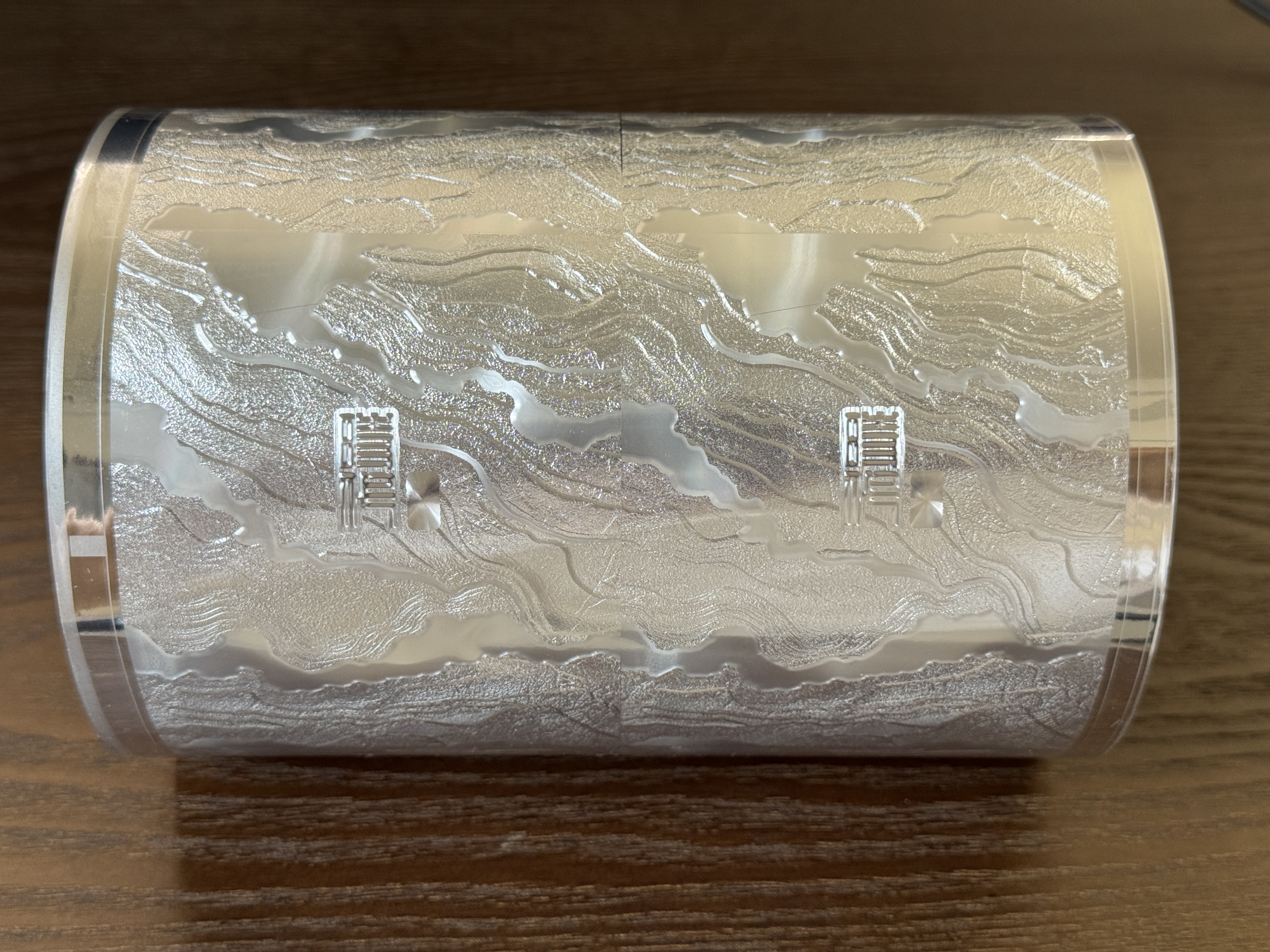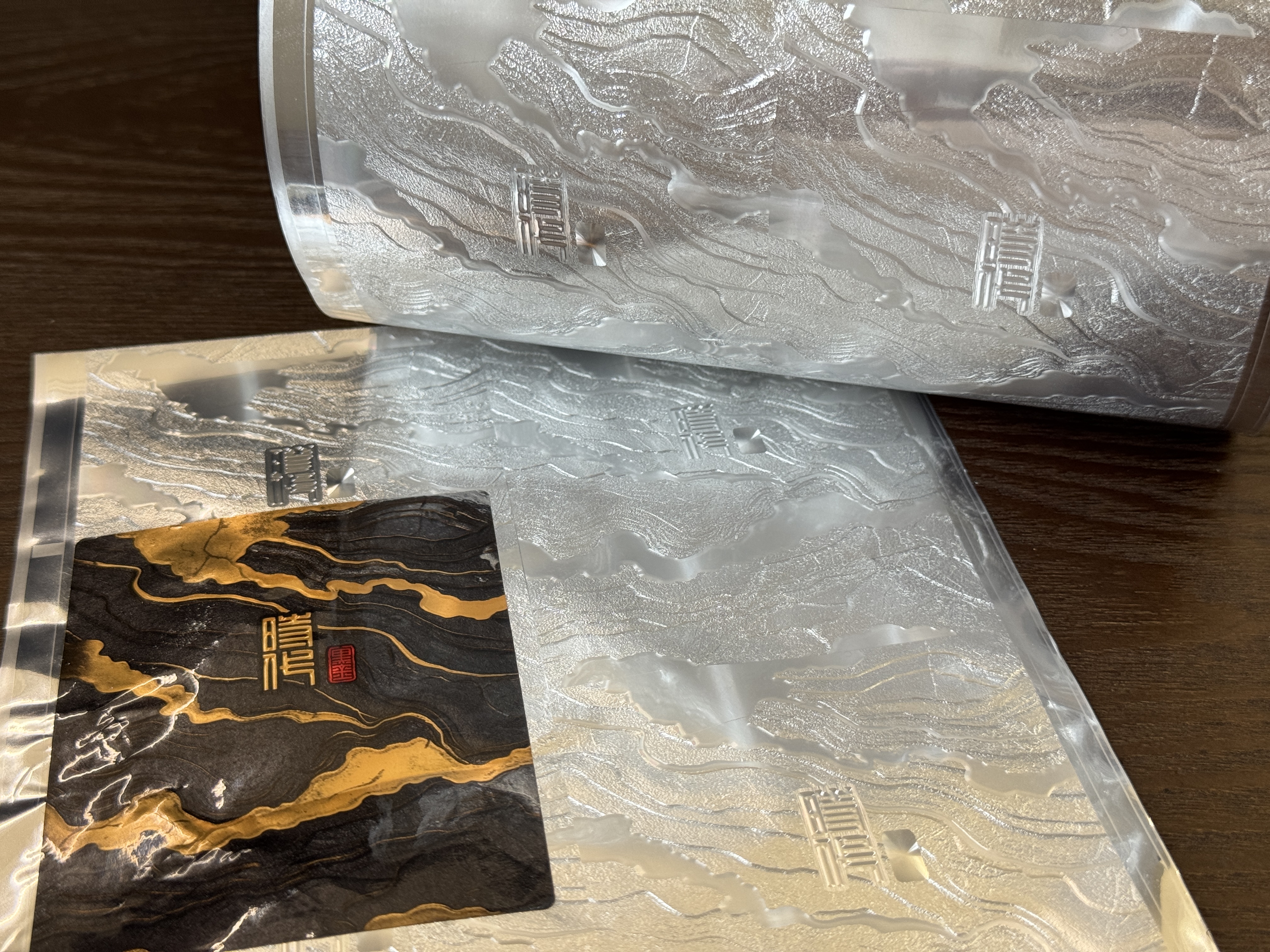
A lamination film that integrates a platinum-like optical relief effect into a premium packaging film structure. Designed for platinum-like optical relief in lamination workflows, it is matched to the actual substrate, machine, graphic area and downstream converting sequence. Available finishes include Platinum-like metallic gloss, plain holographic gold or silver, light-pillar effects and custom registered patterns. Typical applications include premium tobacco and spirits packaging, tea and gift cartons, cosmetics, perfume packaging and high-value branded cartons.
A lamination film that integrates a platinum-like optical relief effect into a premium packaging film structure. Optical relief across a laminated surface; Suitable for downstream printing and converting when matched to the film structure; Custom registered patterns for premium cartons.
Registered transfer or lamination of a custom optical-relief pattern for premium packaging. Process conditions are matched to the transfer or lamination line, film construction and substrate. The optical relief remains visually dimensional while the surface is flat. Artwork repeat, registration control and the downstream converting route must be planned together.
Premium tobacco and spirits packaging, tea and gift cartons, cosmetics, perfume packaging and high-value branded cartons
Compatible coated paperboard, labels, laminated paper and packaging films selected for the transfer or lamination route
Store sealed in the original packaging, away from direct sunlight, heat and humidity. Recommended storage is 5-35°C. Use within 12 months from shipment and keep long rolls supported horizontally.
Platinum Relief Lamination Films integrate a bright platinum-like holographic relief effect into a laminated packaging surface. The optical structure can create apparent three-dimensional depth, light pillars, plain holographic gold or silver and selected custom patterns while the film surface remains smooth. The product is intended for premium cartons and printed laminates that need a broad, consistent optical field combined with downstream printing and converting. Unlike a registered spot-transfer product, the lamination route is selected primarily for surface integration, coverage and continuity across the laminated construction.
| Parameter Attribute | Technical Specification / Production Value |
|---|---|
| Product Category | Platinum-relief optical lamination film |
| Optical Effect | Platinum-like gloss with naked-eye relief depth on a smooth film |
| Available Looks | Light pillars, plain holographic gold/silver and selected custom patterns |
| Application Method | Lamination or compatible transfer-lamination workflow |
| Suitable Constructions | Compatible paperboard, laminated paper and selected PET/OPP packaging structures |
| Downstream Processing | Printing, cutting, creasing and converting after construction approval |
| Critical Control | Web tension, pillar direction, cleanliness, laminate bonding and ink density |
| Storage | Sealed, supported and protected from heat, humidity, pressure and direct sunlight |
The film uses a holographic optical structure to create highlights and shadows that resemble a raised platinum relief even though the laminated surface remains physically flat. This allows designers to add visual depth over a larger area without using a mechanical embossing plate. The laminated film becomes part of the package construction, so appearance cannot be evaluated separately from bond strength, substrate flatness, ink system and downstream folding. A plain platinum field can provide a highly reflective base for transparent color, while light pillars and custom patterns can direct attention across the front panel. Because reflection is intense, dust, scratches, tension variation and uneven lamination pressure are more visible than on a conventional printed surface.
Match the film to the adhesive, substrate and lamination equipment before commercial production. Control unwind and rewind tension to maintain pattern direction and prevent light pillars from leaning or stretching. Use even nip pressure and confirm complete bond formation without silvering, bubbles or trapped contamination. Maintain a clean, static-controlled environment because dust is amplified by the reflective surface. If printing follows lamination, use compatible inks and control ink-film density; overly opaque color can hide the optical effect. A spectrophotometer can help maintain repeatable transparent color over the metallic base. Include cutting, creasing, folding and gluing in the sample because the laminated film and board must behave as one finished structure.
Typical markets include premium tobacco and liquor boxes, tea and gift cartons, luxury cosmetics, perfume packaging, technology products, high-value tool packaging and decorative branded cartons. The film is appropriate where a larger laminated surface should carry a consistent platinum or holographic effect. For small registered emblems or optical images that must align precisely with printed graphics, evaluate the registered transfer-film route instead.
Provide the substrate, laminate structure, adhesive, film width, optical pattern, pillar direction, printed artwork, target color, lamination equipment and downstream finishing operations. State whether printing occurs before or after lamination and identify any high-coverage white or opaque ink areas. For custom patterns, define repeat size and panel layout. A commercial approval sample should use the actual adhesive and board because bond appearance and fold behavior cannot be judged from loose film alone.
Keep the rolls sealed in the original packaging and store them in a cool, dry area away from direct sunlight, heat, moisture and dust. Support long rolls horizontally and avoid impact on the roll edges. Allow material to acclimate to the production area before opening when the storage and press-room conditions differ significantly. Inspect laminate bond, bubbles, silvering, wrinkles, optical brightness, pattern direction, dust, scratches, print adhesion and fold performance. Approve the assembled carton under the intended retail lighting. Keep the film direction and approved construction in the repeat-order specification.
Is the platinum relief physically embossed?
No. The holographic structure creates a visual relief illusion while the laminated surface can remain smooth.
Can the film be printed after lamination?
Compatible downstream printing can be evaluated, but ink wetting, density, adhesion and curing must be tested on the complete laminated construction.
Why do light pillars appear tilted?
Web-tension variation, film orientation or converting alignment can distort a directional pattern. Control unwind direction and tension through lamination.
What causes bubbles or silvering?
Possible causes include adhesive mismatch, insufficient coat weight, uneven nip pressure, contamination, trapped air or an unsuitable substrate surface.
When should registered transfer film be selected instead?
Choose registered transfer when an optical image must align to a precise printed area. Choose lamination film for integrated surface coverage and continuity.
A lamination film that integrates a platinum-like optical relief effect into a premium packaging film structure. Designed for platinum-like optical relief in lamination workflows, it is matched to the actual substrate, machine, graphic area and downstream converting sequence. Available finishes include Platinum-like metallic gloss, plain holographic gold or silver, light-pillar effects and custom registered patterns. Typical applications include premium tobacco and spirits packaging, tea and gift cartons, cosmetics, perfume packaging and high-value branded cartons.