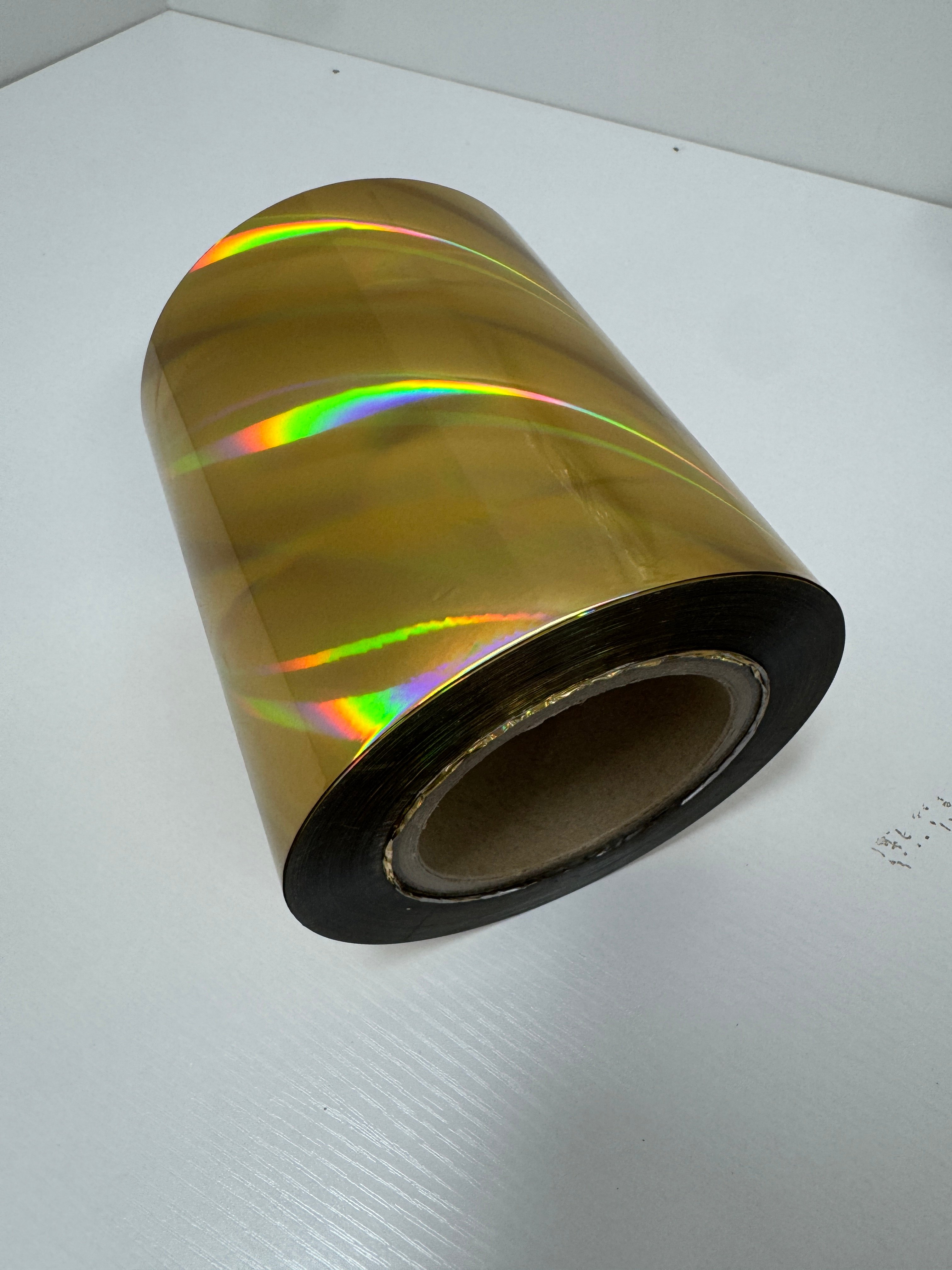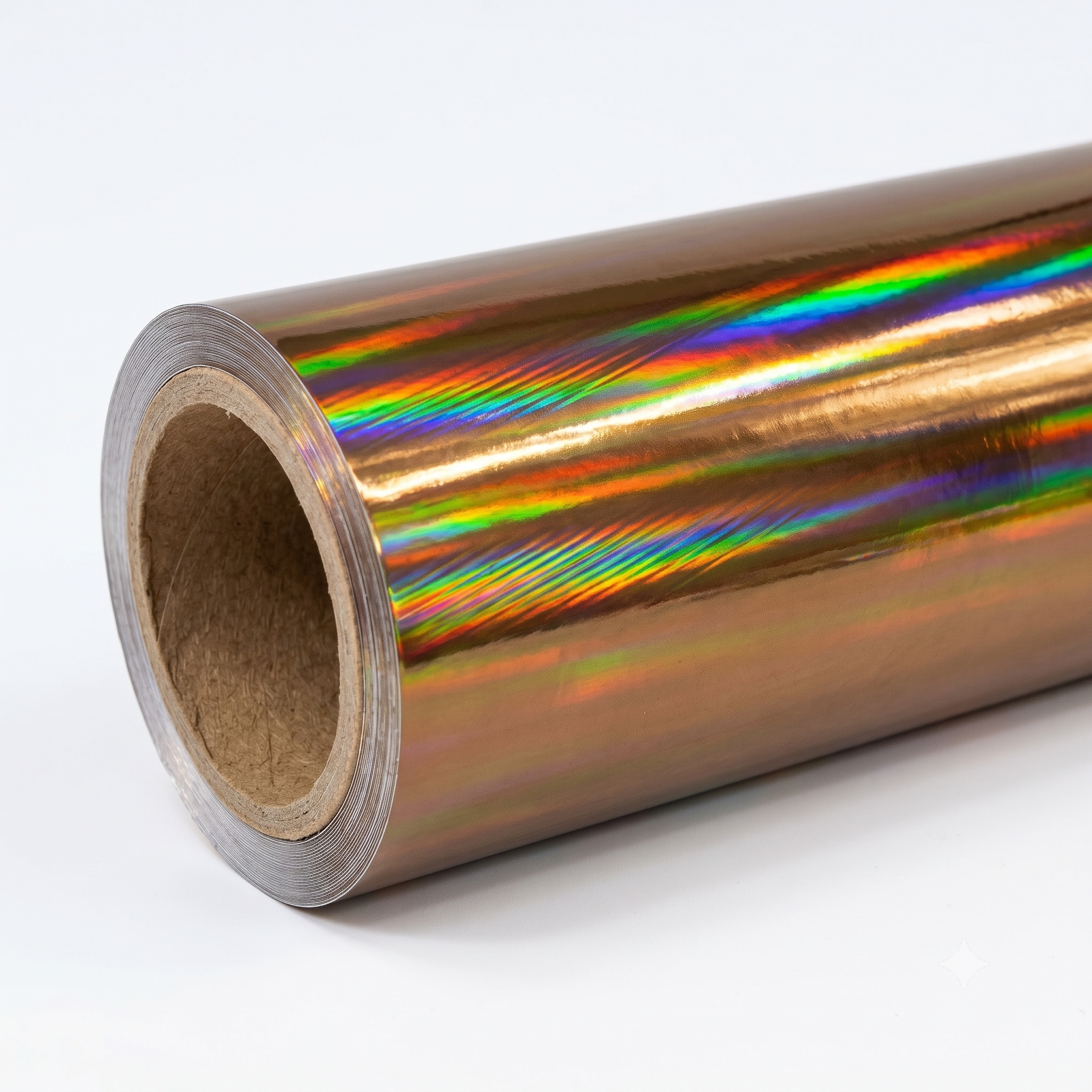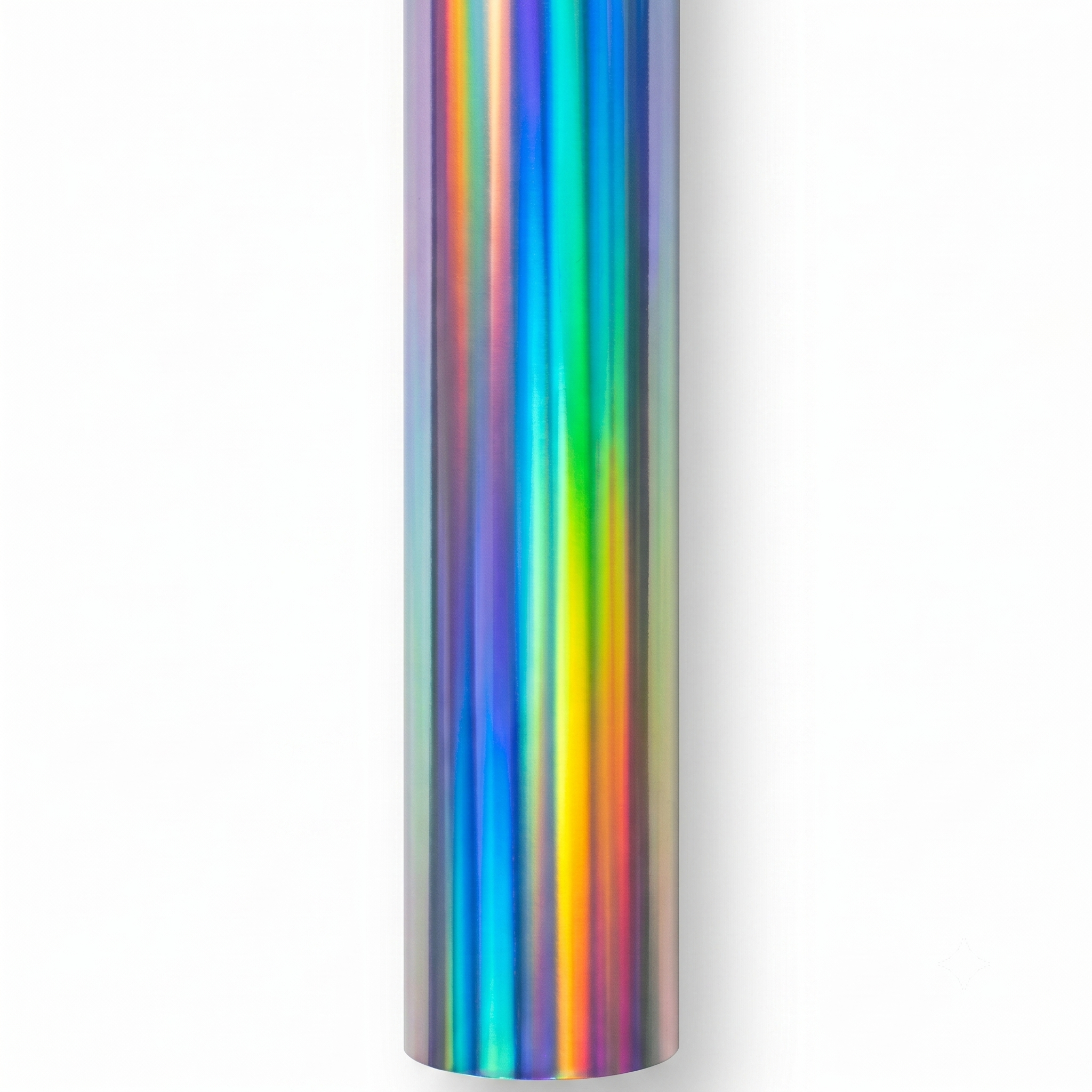
A registered transfer film that creates a platinum-like optical relief effect on premium packaging surfaces. Designed for registered optical relief transferred onto premium packaging, it is matched to the actual substrate, machine, graphic area and downstream converting sequence. Available finishes include Platinum-like metallic gloss, plain holographic gold or silver, light-pillar effects and custom registered patterns. Typical applications include premium tobacco and spirits packaging, tea and gift cartons, cosmetics, perfume packaging and high-value branded cartons.
A registered transfer film that creates a platinum-like optical relief effect on premium packaging surfaces. Visually dimensional relief on a flat surface; Registered optical pattern; Custom artwork for premium brand packaging.
Registered transfer or lamination of a custom optical-relief pattern for premium packaging. Process conditions are matched to the transfer or lamination line, film construction and substrate. The optical relief remains visually dimensional while the surface is flat. Artwork repeat, registration control and the downstream converting route must be planned together.
Premium tobacco and spirits packaging, tea and gift cartons, cosmetics, perfume packaging and high-value branded cartons
Compatible coated paperboard, labels, laminated paper and packaging films selected for the transfer or lamination route
Store sealed in the original packaging, away from direct sunlight, heat and humidity. Recommended storage is 5-35°C. Use within 12 months from shipment and keep long rolls supported horizontally.
Platinum Relief Registered Transfer Films combine a bright platinum-like metallic appearance with a registered optical-relief image that appears three-dimensional while the transferred surface remains smooth to the touch. The film can carry light pillars, plain holographic gold or silver, custom relief graphics and selected security elements. It is intended for premium packaging and controlled registration workflows where the optical image must align with printed artwork, panel geometry or a designated transfer area.
| Parameter Attribute | Technical Specification / Production Value |
|---|---|
| Product Category | Registered platinum-relief transfer film |
| Optical Effect | Naked-eye 3D relief illusion on a physically smooth surface |
| Available Looks | Light-pillar gold, plain holographic gold/silver and custom patterns |
| Registration Accuracy | Up to 0.15 mm under a validated equipment and artwork route |
| Suitable Substrates | Coated paper, premium card, security paper and compatible PET/OPP or laminated bases |
| Customization | Pattern repeat, relief artwork and selected micro-security features |
| Critical Control | Web tension, registration mark reading, dust control and optical direction |
| Storage | Sealed, dry and protected from pressure, heat, moisture and contamination |
The relief is an optical construction formed in the holographic structure, not a mechanically raised emboss. Light is redirected to create highlights, shadows and apparent depth even though the finished surface remains flat. This contrast makes the effect suitable for designs that need strong shelf impact without adding a thick physical feature. In a registered transfer route, the optical image is produced with a defined repeat and registration reference so it can align with printed graphics or the package panel. The achievable result depends on the master pattern, repeat design, register control, transfer equipment, web tension and substrate stability. Fine microtext or security elements can increase the difficulty of visual imitation, but their specification must be defined during artwork and master development.
Prepare the printed artwork, film repeat and registration marks as one engineering file. The pattern repeat must suit the package layout and available register-control system. During transfer, maintain stable unwind and rewind tension so light pillars remain straight and relief images do not drift or skew. Keep the press area clean and manage static because the highly reflective surface makes dust and small contamination visible. When CMYK or transparent color is added later, control ink-film thickness so the printed color does not hide the optical depth. A spectrophotometer can support repeatable density control. Validate cutting, creasing and folding against the registered image so key optical elements do not move into trim or fold zones.
Applications include traceability labels, premium tobacco and spirits boxes, luxury cosmetics, tea gift cartons, technology packaging, modern perfume cartons, high-value certificates and selected identity or security documents. The product is most appropriate when the optical image has a defined position and contributes to both decoration and verification. For a continuous non-registered optical surface, a lamination film or random holographic construction may be more efficient.
Provide final dielines, printed artwork, required optical image, repeat size, registration tolerance, substrate, transfer equipment, web width, target color and downstream printing route. Identify every trim, fold, glue and code area. For security features, define which elements are visible to consumers and which require controlled inspection. Custom master development should not begin until the repeat, artwork ownership and approval process are confirmed.
Keep the rolls sealed in the original packaging and store them in a cool, dry area away from direct sunlight, heat, moisture and dust. Support long rolls horizontally and avoid impact on the roll edges. Allow material to acclimate to the production area before opening when the storage and press-room conditions differ significantly. Inspect registration, optical depth, platinum brightness, pillar direction, transfer continuity, dust, scratches and pattern repeat. Use the assembled package for final approval because a flat web cannot fully show how the registered image aligns after cutting and folding.
Is the relief physically raised?
No. The surface can remain smooth while the holographic structure creates a strong visual illusion of depth and relief.
Can the optical image align with printed artwork?
Yes, when the film repeat, registration marks, equipment and artwork are engineered together. Final tolerance depends on the validated production route.
What does the 0.15 mm registration value mean?
It is a project-level capability under controlled equipment and artwork conditions, not an automatic result on every line. Confirm it during sampling.
Can custom microtext be included?
Selected micro-security features can be considered during master development. Artwork, visibility, ownership and inspection requirements must be defined.
How is this different from platinum relief lamination film?
The registered transfer film is selected when an optical image must align to a defined area. Lamination film is generally used to integrate an optical surface into a laminated construction.
A registered transfer film that creates a platinum-like optical relief effect on premium packaging surfaces. Designed for registered optical relief transferred onto premium packaging, it is matched to the actual substrate, machine, graphic area and downstream converting sequence. Available finishes include Platinum-like metallic gloss, plain holographic gold or silver, light-pillar effects and custom registered patterns. Typical applications include premium tobacco and spirits packaging, tea and gift cartons, cosmetics, perfume packaging and high-value branded cartons.