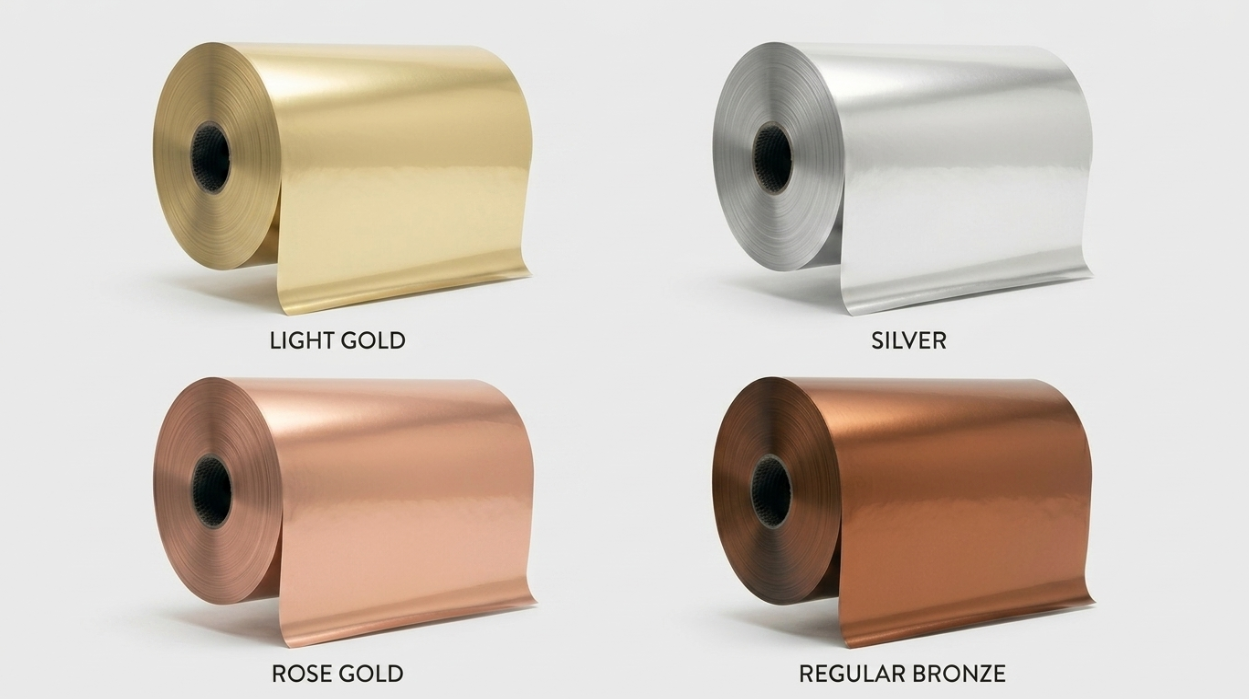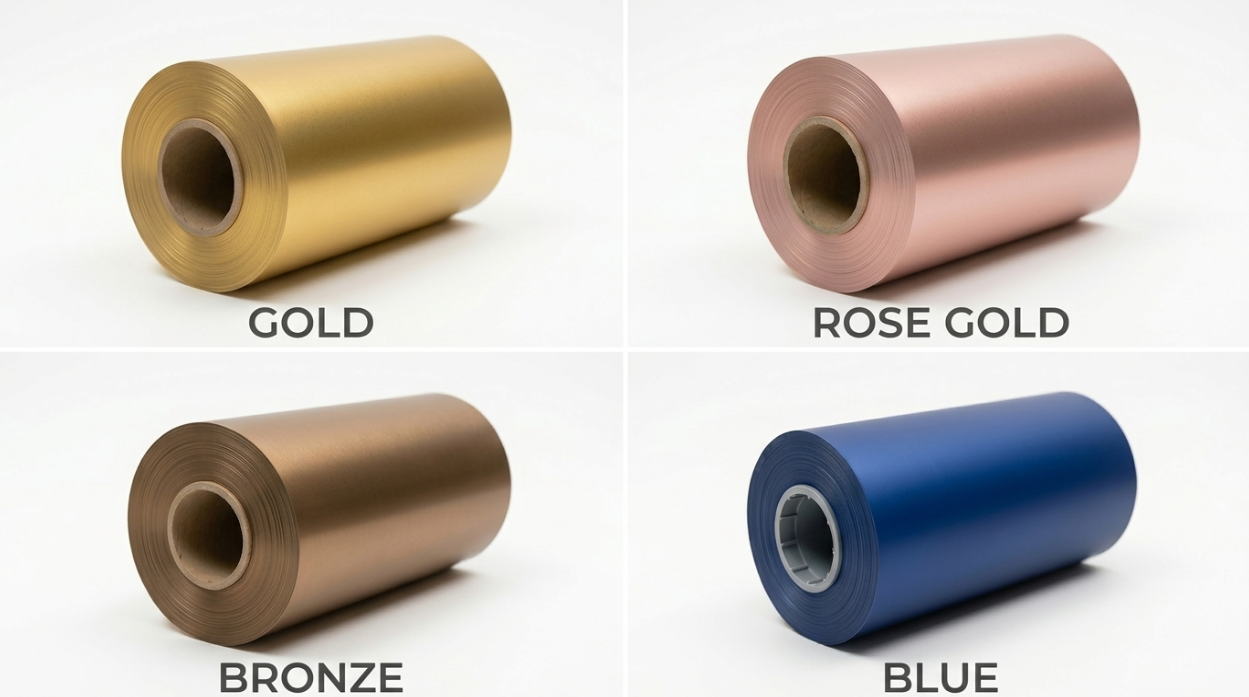
A metallic paper hot stamping route for packaging programs that specify a halogen-free material construction. Designed for metallic decoration with a halogen-free material route, it is matched to the actual substrate, machine, graphic area and downstream converting sequence. Available finishes include Metallic gold, silver, custom colors and holographic effects, depending on version. Typical applications include export packaging, electronics paper packaging, premium gift boxes, food-related outer cartons and brand programs with material restrictions.
A metallic paper hot stamping route for packaging programs that specify a halogen-free material construction. Halogen-free material option; Metallic gold, silver and custom-color decoration; Suitable for export and restricted-material packaging programs.
Hot stamping for paper packaging projects that specify a halogen-free material route. Paper hot stamping range, generally approximately 120-160°C for flat-bed work and 210-240°C for rotary work. Halogen-free positioning must be tied to the ordered construction and supporting documentation. Metallic and holographic versions are separated for clear selection.
Export packaging, electronics paper packaging, premium gift boxes, food-related outer cartons and brand programs with material restrictions
Coated paper, folding boxboard, art paper and compatible laminated paper surfaces
Store sealed in the original packaging, away from direct sunlight, heat and humidity. Recommended storage is 5-35°C. Use within 12 months from shipment and keep long rolls supported horizontally.
Metallic Halogen-Free Hot Stamping Foils are intended for paper and packaging programs that specify a controlled halogen-free material route together with metallic decoration. The product provides gold, silver, matte metallic and selected custom colors while maintaining the edge definition and adhesion expected from a packaging hot-stamping foil. Material status must be tied to the ordered construction and supporting documentation rather than assumed from color alone. The grade is suited to export-oriented consumer packaging and electronics cartons where decorative appearance and material-control requirements must be reviewed together.
| Parameter Attribute | Technical Specification / Production Value |
|---|---|
| Product Category | Metallic hot stamping foil with a specified halogen-free material route |
| Color Range | Gold, silver, matte metallic and selected custom colors |
| Application Method | Flat-bed or compatible rotary hot stamping after process approval |
| Reference Temperature | Approximately 115-145 degrees C, adjusted to substrate and equipment |
| Suitable Substrates | Eco-oriented paper, coated board and selected compatible PET/PE surfaces |
| Material Control | Confirm ordered construction and required supporting documentation |
| Overprint Note | Aggressive ink or coating systems require compatibility testing |
| Storage | Sealed, cool and dry; protect from sunlight, heat and humidity |
This product is selected when a packaging specification includes both a metallic appearance and restrictions on halogen content. The decorative result should not be separated from the material requirement: the customer must identify the applicable specification, documentation expectation and end-use market at the quotation stage. The foil then needs to be matched to the actual paper, board or compatible film surface. A well-matched construction can provide bright metallic reflection, clean release on fine graphics and stable adhesion without treating environmental positioning as a substitute for normal press qualification. Different colors, topcoats and adhesive systems can affect the final material declaration, so the approved order reference should be retained for repeat production.
Confirm the substrate coating, surface treatment and stamping method before selecting the foil. Establish the working temperature from the referenced 115-145 degrees C range and adjust pressure, dwell and speed to achieve clean release without damaging the paper coating. Fine lines need balanced release and die accuracy; larger solids need even pressure and sufficient contact. If the stamped area will be overprinted, varnished, laminated or exposed to aggressive inks, perform a compatibility trial because the environmentally controlled coating system may react differently from a standard decorative foil. The commercial trial must use the actual substrate and downstream sequence, not only a generic white card.
Potential uses include export electronics packaging, environmentally positioned food cartons, maternity and personal-care packaging, premium paper boxes and branded programs with documented material restrictions. Suitability depends on the ordered specification and the customer's compliance framework. The product should not be described as covering every regulation or market automatically; the required declaration, test method and construction must be confirmed for each project.
Provide the required material specification, target market, substrate sample, surface coating, foil color, artwork, stamping method, graphic area and downstream ink or varnish system. State which documents are required for customer approval. If PET or PE is involved, identify its exact surface treatment and whether the stamping area is printed, coated or untreated. Keep the approved foil reference and documentation together in the purchasing record so repeat orders follow the same material route.
Keep the rolls sealed in the original packaging and store them in a cool, dry area away from direct sunlight, heat, moisture and dust. Support long rolls horizontally and avoid impact on the roll edges. Allow material to acclimate to the production area before opening when the storage and press-room conditions differ significantly. Approval should cover appearance, edge definition, adhesion, rub behavior and the required material documentation. When an ink or varnish follows stamping, inspect compatibility after full curing. Do not substitute another metallic shade or construction without reviewing the material declaration and production behavior.
Does the product name alone prove compliance with every halogen requirement?
No. Requirements differ by customer and market. Confirm the ordered construction, applicable specification and supporting documentation for the project.
What stamping temperature should be used?
A reference range of approximately 115-145 degrees C can be used as a starting point, then adjusted for the substrate, die, press speed and stamping method.
Can the foil be overprinted?
It may be possible, but aggressive inks and coatings must be tested with the selected topcoat. Verify adhesion and curing before mass production.
Is it suitable for plastic film?
Selected compatible PET or PE surfaces may be considered after surface-treatment and adhesion testing. Do not assume all untreated films will accept the foil.
What should be retained for repeat orders?
Keep the approved foil code, color sample, substrate, process condition and material documentation linked to the purchase specification.
A metallic paper hot stamping route for packaging programs that specify a halogen-free material construction. Designed for metallic decoration with a halogen-free material route, it is matched to the actual substrate, machine, graphic area and downstream converting sequence. Available finishes include Metallic gold, silver, custom colors and holographic effects, depending on version. Typical applications include export packaging, electronics paper packaging, premium gift boxes, food-related outer cartons and brand programs with material restrictions.