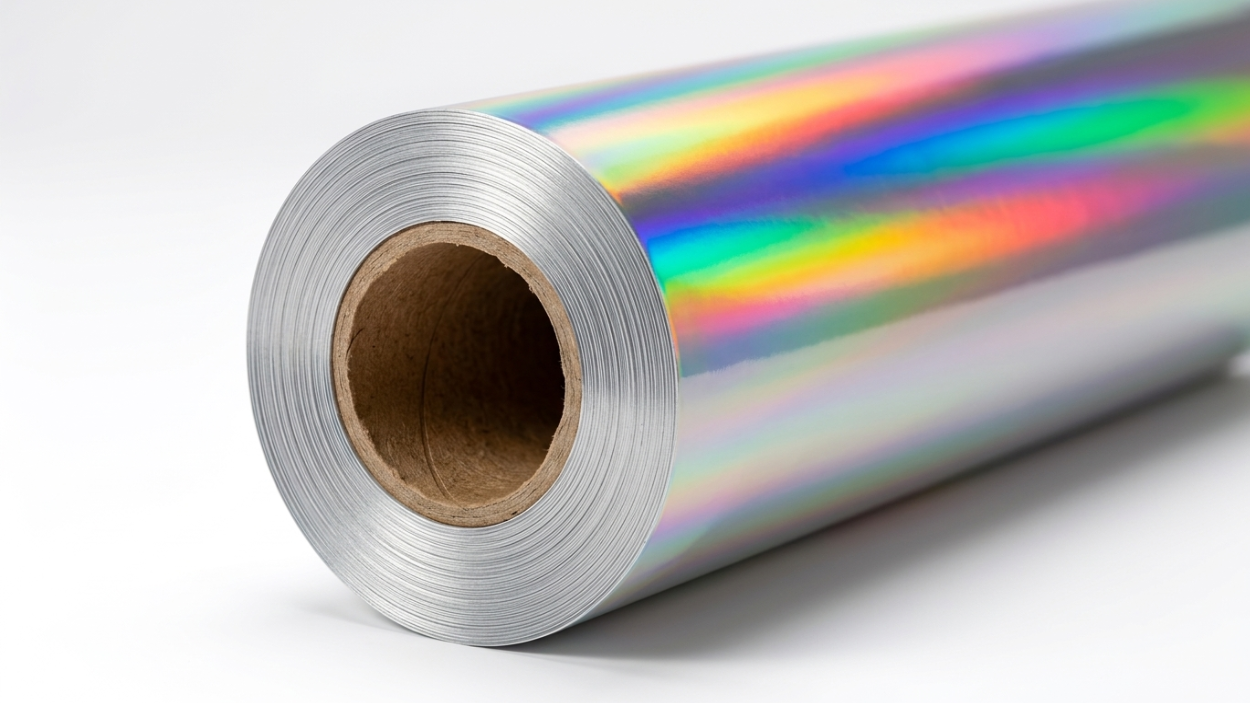
A holographic paper hot stamping route for packaging programs that specify a halogen-free material construction. Designed for holographic decoration with a halogen-free material route, it is matched to the actual substrate, machine, graphic area and downstream converting sequence. Available finishes include Holographic gold, silver, plain rainbow and selected custom effects. Typical applications include export packaging, electronics paper packaging, premium gift boxes, food-related outer cartons and brand programs with material restrictions.
A holographic paper hot stamping route for packaging programs that specify a halogen-free material construction. Halogen-free material option; Holographic optical decoration; Suitable for premium export packaging with material restrictions.
Hot stamping for paper packaging projects that specify a halogen-free material route. Paper hot stamping range, generally approximately 120-160°C for flat-bed work and 210-240°C for rotary work. Halogen-free positioning must be tied to the ordered construction and supporting documentation. Metallic and holographic versions are separated for clear selection.
Export packaging, electronics paper packaging, premium gift boxes, food-related outer cartons and brand programs with material restrictions
Coated paper, folding boxboard, art paper and compatible laminated paper surfaces
Store sealed in the original packaging, away from direct sunlight, heat and humidity. Recommended storage is 5-35°C. Use within 12 months from shipment and keep long rolls supported horizontally.
Holographic Halogen-Free Hot Stamping Foils provide diffractive decoration for paper packaging programs that require a halogen-free material route. The page refers to the HP1N / HP2N family, with the holographic construction selected for the approved substrate, machine and visual reference. A halogen free holographic foil is not defined by appearance alone: the ordered construction and supporting documentation must match the customer's material requirement.
The product is intended for export packaging, electronics cartons, premium gift boxes, food-related outer cartons and brand programs that control restricted materials. Selection begins with the exact paper or laminated surface, the graphic area and the press route. This keeps the halogen free hot stamping foil specification connected to the real job instead of treating every gold, silver or rainbow finish as interchangeable.
| Parameter Attribute | Technical Specification / Production Value |
|---|---|
| Product Category | HP1N / HP2N halogen-free hot stamping foil |
| Application Method | Hot stamping on approved paper packaging materials |
| Processing Range | Approximately 120-160°C for flat-bed work and 210-240°C for rotary work; confirm by construction and press |
| Production Speed | Approximately 4,500-6,500 sheets/hour or 70-90 m/min, subject to press and graphic area |
| Carrier / Film | PET carrier, typically 12μm or 15μm |
| Standard Width | 640mm and selected wider formats; custom slitting available |
| Roll Length | 120m standard rolls and longer production rolls by order |
| Available Finishes | Holographic gold, silver, plain rainbow and selected custom effects |
| Suitable Substrates | Coated paper, folding boxboard, art paper and compatible laminated paper surfaces |
| Storage | Store sealed away from sunlight, heat and humidity at 5-35°C; use within 12 months and support long rolls horizontally |
A halogen free holographic foil should be ordered against a defined compliance requirement. The product code, declared construction and supporting documents form one specification. A visual sample can approve the optical effect, but it cannot by itself prove that a different production construction follows the same material route. Purchasing records should therefore retain the approved product code, color reference and documentation version.
Metallic and holographic versions are kept separate because their decorative layers and intended effects differ. The holographic hot stamping foil produces diffraction through an optical pattern, while a standard metallic foil provides a more uniform reflective surface. When the project requires both restricted-material control and a holographic appearance, both conditions must be stated in the inquiry and order.
Coated paper, folding boxboard and laminated paper may share the same base sheet but behave differently after ink, varnish or lamination. Surface coating, cure, texture and contamination affect adhesive activation and final anchorage. Send the finished or representative substrate rather than an unprinted base paper when choosing a halogen free hot stamping foil for a production package.
Fine logos require clean release and controlled edges. Broad panels require uniform contact and coverage. Mixed artwork may need a balanced release behavior and a staged press trial. The relevant holographic hot stamping foil is selected around the dominant graphic, die type, contact time and downstream folding or lamination, not simply around the nominal paper grade.
The stated temperature and speed ranges are practical starting windows, not universal settings. Die material, machine design, sheet coverage, pressure distribution and dwell time all influence the actual working point. Begin within the supplier range, verify the die-face condition and change one variable at a time until the transfer is complete without filling fine detail or damaging the coating.
A stable halogen free holographic foil result should show clean carrier release, complete optical coverage and durable adhesion after the sheet returns to room temperature. Check both bright light and normal viewing conditions because a holographic pattern can hide small transfer gaps under one angle and reveal them under another. Retain the approved test strip with the production recipe.
Provide the substrate name, surface coating, machine type, flat-bed or rotary process, graphic dimensions, planned speed, required finish, roll width and any downstream printing, lamination, embossing, cutting or folding. State the halogen-free requirement explicitly and identify which declaration or customer standard the project follows.
For repeat orders, use the approved halogen free hot stamping foil code and color reference. A similar-looking holographic hot stamping foil should not be substituted without confirming the material route and production test. This control protects both appearance consistency and the customer's restricted-material program.
Q1: Is every holographic foil automatically halogen-free?
A1: No. The requirement must be linked to the approved HP1N / HP2N construction and its supporting documentation. Similar appearance does not establish the same material declaration.
Q2: Which surfaces can be tested?
A2: The stated range includes coated paper, folding boxboard, art paper and compatible laminated paper. Final suitability depends on the actual coating, printing and lamination stack.
Q3: Can the foil be used for fine text and large solids?
A3: Both can be evaluated, but release behavior and press settings differ. Share the artwork so the test can represent the dominant graphic area.
Q4: What should be retained for repeat orders?
A4: Keep the approved product code, color or optical reference, substrate, process recipe, roll dimensions and the material documentation used for the original approval.
A holographic paper hot stamping route for packaging programs that specify a halogen-free material construction. Designed for holographic decoration with a halogen-free material route, it is matched to the actual substrate, machine, graphic area and downstream converting sequence. Available finishes include Holographic gold, silver, plain rainbow and selected custom effects. Typical applications include export packaging, electronics paper packaging, premium gift boxes, food-related outer cartons and brand programs with material restrictions.