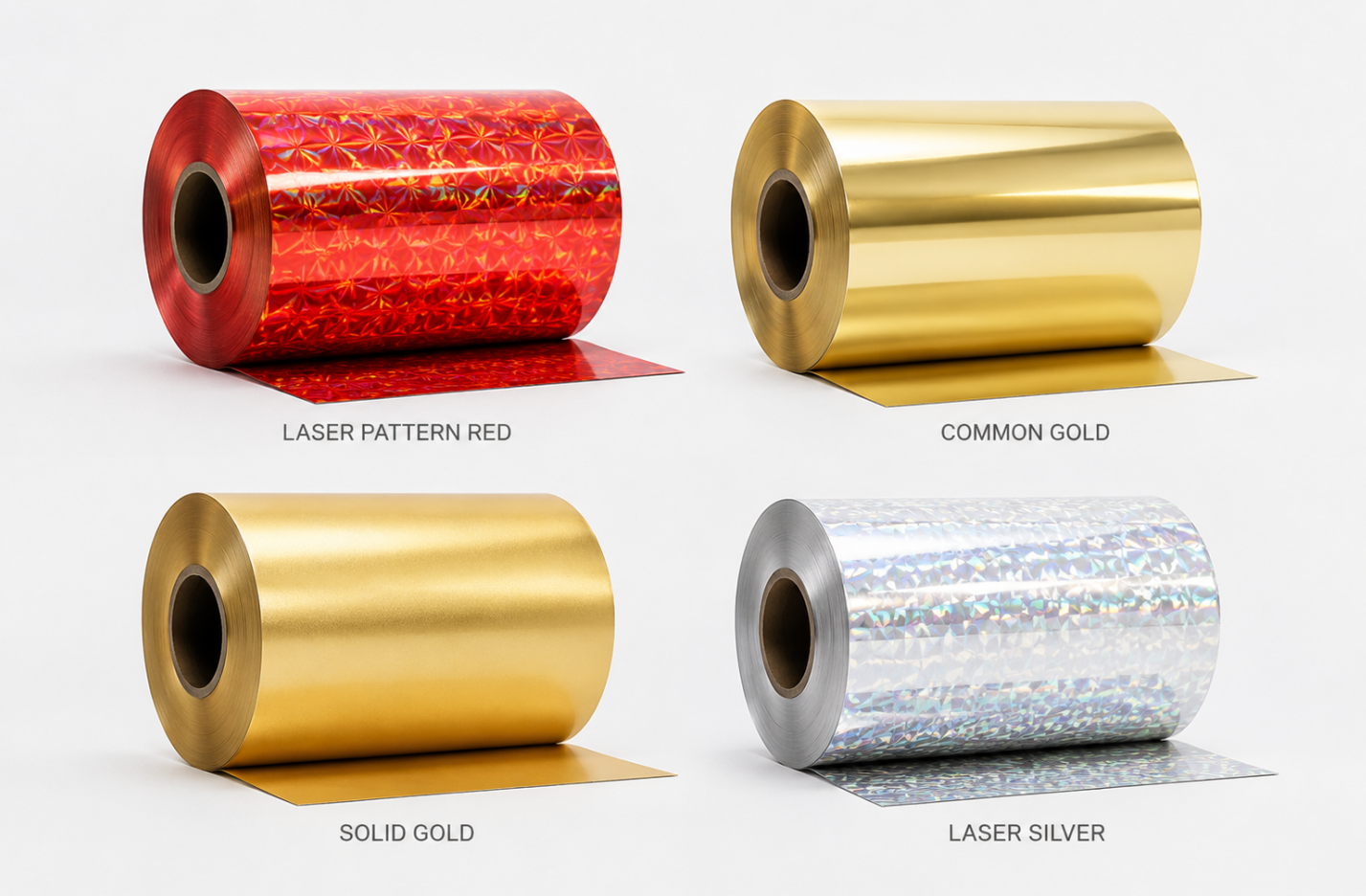
A holographic foil developed for a second hot stamping pass that adds an optical layer over an existing foil area. Designed for holographic second-pass foil-on-foil decoration, it is matched to the actual substrate, machine, graphic area and downstream converting sequence. Available finishes include Holographic gold, silver, red, plain rainbow and selected patterns. Typical applications include premium cartons, collectible packaging, gift boxes, tobacco and spirits packaging, and complex layered metallic graphics.
Holographic Foils for Foil-on-Foil Overstamping add diffractive movement to a two-pass foil stacking process. A holographic layer can be applied over a metallic base, or selected metallic detail can be applied over a compatible holographic field, creating layered reflection that changes with the viewing angle. The foil construction is selected to transfer during the second hot-stamping pass while protecting the first layer from heat-related pull-back. Accurate registration, optical pattern direction and a controlled temperature sequence are essential for a clean result.
| Parameter Attribute | Technical Specification / Production Value |
|---|---|
| Product Category | Holographic foil for second-pass foil-on-foil hot stamping |
| Optical Effect | Rainbow, patterned, light-pillar or selected holographic contrast over metal |
| Application Method | Precisely registered second hot-stamping pass over a compatible foil base |
| Suitable Substrates | Smooth coated paper, premium board and compatible laminated paper |
| Pattern Control | Holographic direction and repeat aligned with the final package |
| Temperature Strategy | Second pass established to transfer without softening the first foil |
| Critical Control | Registration, die flatness, optical orientation and base-layer protection |
| Storage | Sealed and protected from humidity, heat, pressure and roll-edge damage |
The effect is more complex than applying two ordinary foil colors. The holographic layer introduces direction, diffraction and changing brightness, while the first foil supplies a stable reflective background. Fine holographic symbols can appear to float over gold or silver, or a metallic line can frame a moving rainbow field. The optical result depends on which layer is applied first, how much the areas overlap and how the holographic grating is oriented on the finished panel. Excessive second-pass heat can disturb the first foil, while poor die contact can leave gaps that interrupt the holographic pattern. The design should therefore be reviewed as a layered optical construction before dies are produced.
Define the base foil, upper foil and holographic orientation in the artwork file. If a light-pillar or directional pattern is used, identify the required vertical or horizontal direction on every package panel. Complete the first stamping pass with strong adhesion and a smooth surface, then allow the sheet or web to stabilize before the second pass. Use a clean, precisely registered die and establish the second-pass condition from a conservative heat and pressure setting. Check that the upper holographic foil releases sharply and that the base metal is not picked off. Inspect the result under angled light, because small registration or direction errors may not be obvious under flat inspection lighting. Downstream creasing and folding should also be included in approval.
Suitable for premium tobacco and liquor cartons, collectible cards, luxury gift boxes, commemorative packaging, certificates and selected security documents. It is particularly effective for small holographic emblems over a larger metallic field, layered borders, edition marks and brand symbols that need both color contrast and movement. If the project requires continuous registered holographic imagery rather than a second stamped accent, a dedicated registered transfer construction may be more appropriate.
Provide both foil references, holographic pattern, pattern direction, repeat requirement, overlap artwork, final substrate, die files, press type and registration tolerance. State whether the holographic layer is first or second. Include the final package orientation and expected viewing light. A two-pass press proof should record the approved condition for each layer and verify that the optical pattern remains clean after cutting, creasing, folding and any protective varnish.
Keep the rolls sealed in the original packaging and store them in a cool, dry area away from direct sunlight, heat, moisture and dust. Support long rolls horizontally and avoid impact on the roll edges. Allow material to acclimate to the production area before opening when the storage and press-room conditions differ significantly. Inspect the first layer before overstamping and the completed construction afterward. Approval points include adhesion, transfer sharpness, overlap accuracy, holographic brightness, pattern direction, base-layer pull-back, rub resistance and consistency across the sheet or web.
Can holographic foil be applied over any metallic foil?
No. The base surface, adhesion, heat resistance and second-foil release must be compatible. Test the exact pair and sequence.
Why does the holographic image look different across panels?
Directional patterns may be rotated relative to the final package, or foil unwind direction may not have been controlled. Specify orientation before production.
What causes the lower foil to distort?
Excessive second-pass heat, pressure or dwell can soften the first foil. A lower second-pass condition and a compatible base construction help control this risk.
Is this the same as registered holographic foil?
No. This product creates a second stamped holographic layer over another foil. Registered holographic films use a different pattern-to-print registration route.
What sample is required before ordering?
Approve a two-pass sample using the production substrate, both foil colors, actual dies, pattern direction and downstream finishing sequence.
A holographic foil developed for a second hot stamping pass that adds an optical layer over an existing foil area. Designed for holographic second-pass foil-on-foil decoration, it is matched to the actual substrate, machine, graphic area and downstream converting sequence. Available finishes include Holographic gold, silver, red, plain rainbow and selected patterns. Typical applications include premium cartons, collectible packaging, gift boxes, tobacco and spirits packaging, and complex layered metallic graphics.