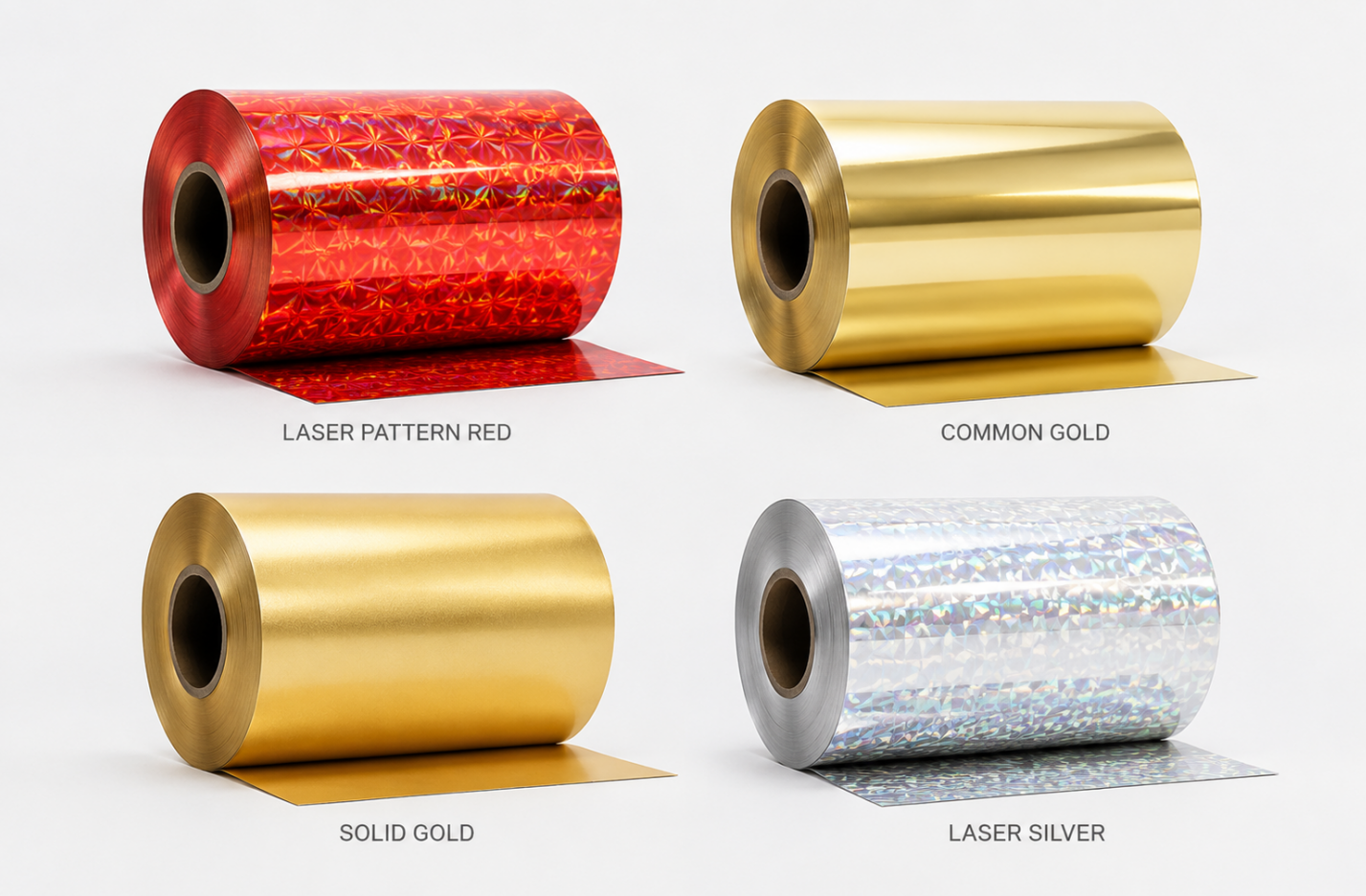
A metallic foil developed for a second hot stamping pass over an existing foil layer. Designed for metallic second-pass foil-on-foil decoration, it is matched to the actual substrate, machine, graphic area and downstream converting sequence. Available finishes include Metallic and holographic colors for two-layer decorative combinations. Typical applications include premium cartons, collectible packaging, gift boxes, tobacco and spirits packaging, and complex layered metallic graphics.
A metallic foil developed for a second hot stamping pass over an existing foil layer. Second-layer metallic decoration; Controlled release over a stable first foil layer; Supports two-color and layered metallic graphics.
A second registered hot stamping pass over a previously transferred foil area. Paper hot stamping range, with the second pass controlled to protect the first foil layer. Registration and the condition of the first foil layer are central to a clean second transfer. Select metallic or holographic versions according to the two-layer design.
Premium cartons, collectible packaging, gift boxes, tobacco and spirits packaging, and complex layered metallic graphics
Smooth coated paper, folding boxboard and compatible laminated paper with a stable first foil layer
Store sealed in the original packaging, away from direct sunlight, heat and humidity. Recommended storage is 5-35°C. Use within 12 months from shipment and keep long rolls supported horizontally.
Metallic Foils for Foil-on-Foil Overstamping are developed for a controlled second hot-stamping pass directly over an existing metallic foil layer. The construction combines a suitable release system and heat-resistant surface so the upper foil can transfer cleanly without pulling back, melting or damaging the first metallic layer. This process creates two-color metallic details, stacked outlines and visually raised relief effects without relying only on printed ink. It is intended for high-value projects where registration accuracy, die quality and a carefully established two-pass temperature window can be maintained.
| Parameter Attribute | Technical Specification / Production Value |
|---|---|
| Product Category | Metallic foil for second-pass foil-on-foil hot stamping |
| Visual Effect | Two-color metallic layering, stacked outlines and relief-like contrast |
| Application Method | First foil layer followed by a precisely registered second hot-stamping pass |
| Suitable Substrates | High-smoothness coated paper and heavy premium paperboard |
| Color Options | Gold, silver, red metallic and selected custom combinations |
| Temperature Strategy | Second pass generally established below the first-pass heat level |
| Critical Control | Registration, die flatness, pressure balance and protection of the base layer |
| Storage | Sealed, cool and dry; protect roll faces and edges from impact |
Foil-on-foil overstamping differs from ordinary two-color stamping because the second image overlaps the first foil rather than sitting only on exposed paper. The upper layer must release onto a smooth metallic surface while the lower layer remains anchored to the substrate. The process can create a red metallic mark over gold, silver detailing over a darker metal, fine borders, symbols or layered textures. The visual depth comes from reflection, edge contrast and accurate stacking; the surface may still remain relatively flat compared with mechanical embossing. Because the second pass applies heat and pressure to the first foil again, an unsuitable combination can soften the base layer, cause pull-back, blur edges or transfer both layers to the upper carrier.
Approve the two foils as a matched sequence rather than selecting them independently. The first foil must adhere strongly to the substrate and provide a smooth, continuous surface. Its stamping condition should avoid excessive heat or pressure that may weaken the layer before the second pass. The second die requires exact registration and should contact only the intended overlap area. Establish the second-pass temperature, dwell and pressure gradually; it is commonly set lower than the first pass to reduce the risk of softening the base. Inspect for edge movement, metal pick-off, base-layer distortion and carrier contamination. When the design includes embossing, confirm whether embossing occurs with the first pass, second pass or as a separate operation, because the order changes contact pressure and registration.
Applications include limited-edition trading cards, premium tobacco and spirits cartons, certificates, commemorative packaging, luxury gift boxes and selected identity or security documents. The process is most valuable when the overlapping metallic area is visible and intentional. For designs where two colors never overlap, conventional separate stamping may be simpler and more economical. Foil-on-foil should therefore be specified where the layered construction provides a clear visual or authentication benefit.
Send both foil colors, overlap artwork, final substrate, first and second die files, press type, registration tolerance and planned production order. Identify solid areas, microtext, fine lines and any embossed zones. A press proof should establish which foil is applied first and document the approved temperature, pressure and dwell for each pass. For repeat production, keep the same sequence and verify that replacement batches match the approved release and adhesion behavior.
Keep the rolls sealed in the original packaging and store them in a cool, dry area away from direct sunlight, heat, moisture and dust. Support long rolls horizontally and avoid impact on the roll edges. Allow material to acclimate to the production area before opening when the storage and press-room conditions differ significantly. Quality approval should include first-layer adhesion, second-layer transfer, overlap registration, sharpness, color contrast, resistance to pull-back and final rub performance. Retain both a first-pass sample and a completed two-pass sample so troubleshooting can identify which stage changed.
Can any two metallic foils be stacked?
No. The base foil adhesion, upper surface, second-foil release and heat resistance must work together. Confirm the exact pair through a two-pass trial.
Why does the first foil lift during the second pass?
The second-pass heat or pressure may be too high, the base foil may not be fully anchored, or the foil pair may be incompatible.
Should the second stamping temperature be lower?
It is commonly established below the first-pass level, but the final setting must be confirmed with the actual foil pair, die, substrate and press.
How accurate must registration be?
Registration must match the visible overlap and line width in the artwork. Fine borders and micro-details require tighter press control than broad decorative overlaps.
Can foil-on-foil be combined with embossing?
Yes, when the sequence, die geometry and pressure are validated. A combined trial is necessary because embossing changes contact and registration.
A metallic foil developed for a second hot stamping pass over an existing foil layer. Designed for metallic second-pass foil-on-foil decoration, it is matched to the actual substrate, machine, graphic area and downstream converting sequence. Available finishes include Metallic and holographic colors for two-layer decorative combinations. Typical applications include premium cartons, collectible packaging, gift boxes, tobacco and spirits packaging, and complex layered metallic graphics.