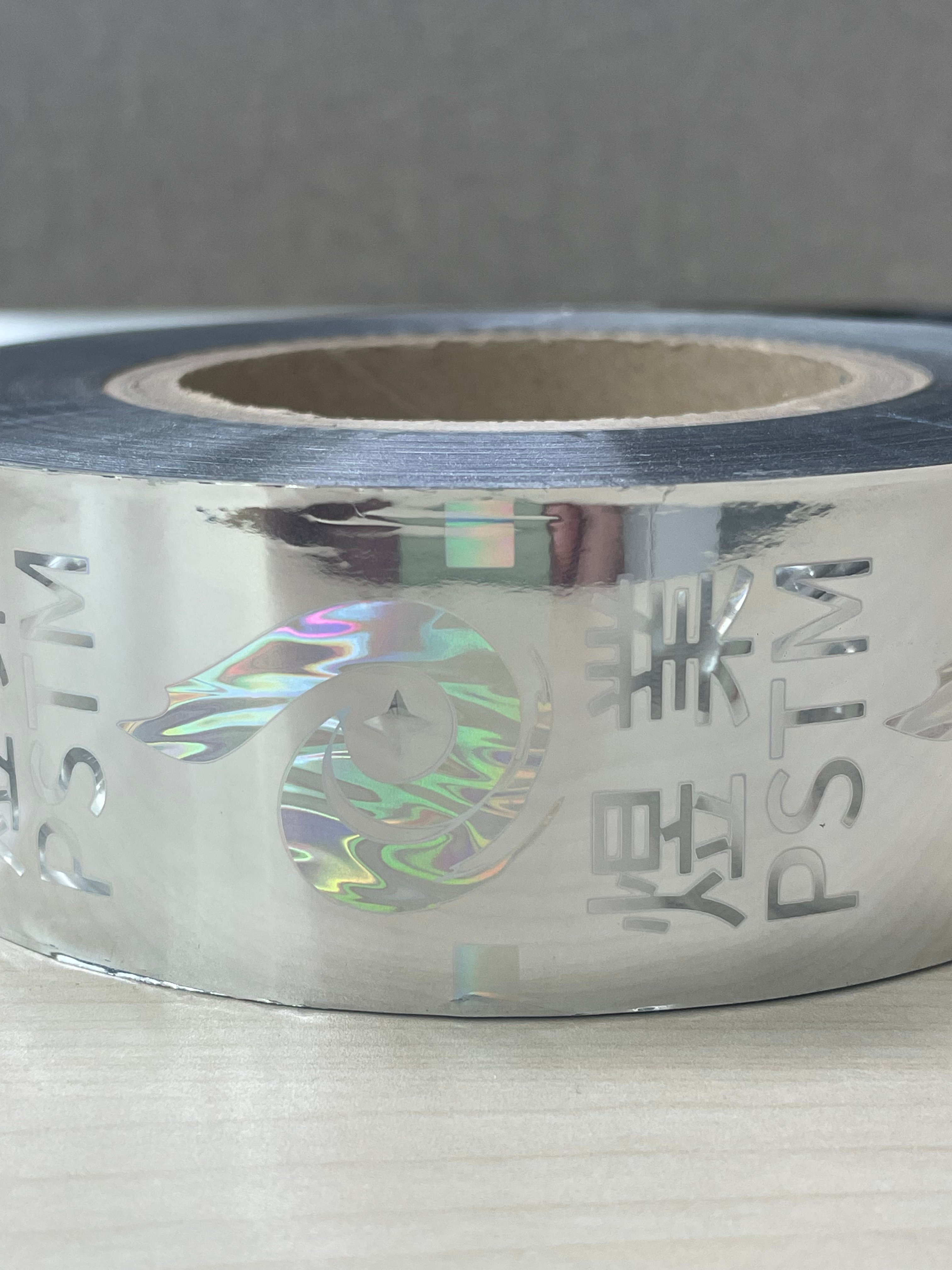
A low-visibility holographic hot stamping effect designed to reveal controlled optical information under selected viewing conditions. Designed for covert optical information in hot-stamped packaging, it is matched to the actual substrate, machine, graphic area and downstream converting sequence. Available finishes include Holographic gold, silver, colored optical effects and custom registered patterns. Typical applications include tobacco packaging, spirits cartons, cosmetics, premium gift boxes, brand-protection labels and security-oriented packaging.
A low-visibility holographic hot stamping effect designed to reveal controlled optical information under selected viewing conditions. Low-visibility security-oriented optical effect; Hot stamping integration on suitable packaging; Can be combined with visible decoration without dominating the design.
Registered hot stamping with optical-sensor tracking and artwork matched to the foil repeat. Hot stamping range selected according to foil construction, substrate and registration equipment. Artwork repeat, sensor mark, foil pitch and press geometry must be aligned as one registered system. Optical requirements are specified separately from the production artwork and repeat data.
Tobacco packaging, spirits cartons, cosmetics, premium gift boxes, brand-protection labels and security-oriented packaging
Suitable coated paperboard, labels and compatible packaging substrates
Store sealed in the original packaging, away from direct sunlight, heat and humidity. Recommended storage is 5-35°C. Use within 12 months from shipment and keep long rolls supported horizontally.
Covert Security Holographic Hot Stamping Foils add low-visibility optical information to suitable packaging surfaces. The HP2F route is intended for projects where a security-oriented effect should remain controlled rather than become the main decorative graphic. A covert security holographic foil can be integrated beside visible branding or within a broader authentication design.
The product is transferred by heat and pressure, with the foil construction selected for the actual coated paperboard, label or compatible packaging surface. A security hologram foil only performs consistently when the visual feature, substrate, die, press settings and inspection method are defined together.
Approval should include viewing the covert feature under the intended illumination and at the inspection angles used by operators or customers.
| Parameter Attribute | Technical Specification / Production Value |
|---|---|
| Product Category | HP2F covert security holographic hot stamping foil |
| Application Method | Hot stamping on approved coated paperboard, labels and packaging surfaces |
| Optical Function | Low-visibility or controlled-view security-oriented effect |
| Processing Range | Qualified according to foil construction, substrate, die and press configuration |
| Production Speed | Set by image definition, heat stability, contact time and substrate response |
| Carrier / Film | PET carrier for holographic hot stamping transfer |
| Width / Roll Format | Specified to artwork and press feed; custom slitting available |
| Available Finishes | Selected holographic colors and covert optical structures by approved project reference |
| Suitable Substrates | Suitable coated paperboard, labels and compatible packaging substrates |
| Storage | Store sealed away from sunlight, heat and humidity at 5-35°C; use within 12 months and support long rolls horizontally |
Covert does not mean invisible under every condition. The customer should define how the feature is expected to appear: at a selected angle, under directed light, with a reference image or as a low-visibility layer checked by trained staff. That inspection method becomes part of the approved specification for the covert security holographic foil.
A bright decorative rainbow pattern may attract attention but fail the covert objective. Conversely, an extremely subtle structure may be difficult to inspect on a pale or highly reflective background. Approve the holographic security foil over the final print color and coating, at the final graphic size, under the intended viewing conditions.
The feature can be placed inside a logo, border, seal or controlled background area. Keep it clear of barcodes and mandatory text unless testing proves readability. When visible metallic decoration is also used, separate the two foil layers in the artwork and purchasing specification so the covert structure is not replaced by a standard holographic finish.
The security hologram foil should support a layered system. Visible graphics help quick recognition; covert optical information supports a closer secondary check; registered, serialized or digital technologies can be added when risk demands stronger control. Each layer should have a defined purpose and verification method.
Coated paperboard, UV varnish, aqueous coating and laminated structures may require different adhesive behavior even when they look smooth. Test the actual printed and coated substrate. Surface contamination, silicone, wax, powder or incomplete cure can prevent reliable bonding and can distort the low-visibility optical structure.
Fine covert detail needs clean release and controlled die edges. Broader areas need uniform contact. Establish heat, pressure and dwell time through a sample ladder, then verify after cooling. A covert security holographic foil must pass the same tape, rub, fold and downstream converting tests as the visible decoration around it.
Record the approved optical master or pattern code, product construction, color, substrate, artwork position, die, machine and inspection condition. A visually similar holographic security foil may not reproduce the same covert information. Repeat orders should therefore use the retained reference rather than a generic description such as holographic gold.
Control access to final artwork and reference samples according to the customer's security procedure. Production waste, overruns and rejected material should follow the agreed handling method. These operational controls matter because an optical feature is only one part of the brand-protection process.
Q1: What does covert mean for this product?
A1: It means the optical information is controlled and intended for a defined viewing or inspection condition, not necessarily invisible under all light.
Q2: Can it be ordered by color alone?
A2: No. The optical structure, approved reference, substrate and inspection condition are as important as color.
Q3: Is covert foil a complete anti-counterfeiting solution?
A3: It is one security layer. Higher-risk programs may combine visible, covert, registered, serialized and digital controls.
Q4: What information is needed for sampling?
A4: Provide the finished substrate, artwork area, press type, desired viewing condition, finishing sequence and the customer's verification requirement.
A low-visibility holographic hot stamping effect designed to reveal controlled optical information under selected viewing conditions. Designed for covert optical information in hot-stamped packaging, it is matched to the actual substrate, machine, graphic area and downstream converting sequence. Available finishes include Holographic gold, silver, colored optical effects and custom registered patterns. Typical applications include tobacco packaging, spirits cartons, cosmetics, premium gift boxes, brand-protection labels and security-oriented packaging.